Wet blanket, wet tea towel

Apart from perhaps some hard-style karate-ka, the importance of relaxation is pretty Seiryokuzenyomuch unanimously accepted. Relaxation leads to improved speed, power, agility, flexibility and many other elements crucial to martial arts. Relaxation is pivotal to the judo maxim of 精力善用 (seiryokuzenyo), maximum efficiency. Our endurance is significantly improved when we relax. Relaxation helps protect us from injury. Yet despite all these great reasons to relax, why do we see so many black-belts move like rusty robots?

I believe that many martial artists believe that they are relaxing, when actually they are employing a great deal of unnecessary muscular strength. Ever since I was a boy, my instructors told me to relax. I thought I was relaxing, but in actuality all I was doing was not tensing my muscles. Perhaps other martial artists are making the same mistake?

Let us imagine a tension scale of zero to 10. Zero would leave us slumped on the floor like a pile of jelly unable to move. 10 is as stiff as a corpse, unable to move. Where would you place yourself on this scale when training? I would wage a bet that you would have more tension in your body than you do while reading this blog right now. Clearly we cannot fight at zero or 10, we need to find a happy medium. Where is that line? Let us assume that the average person walks around at five. I believe the best amount of tension is somewhere below five. I will explain why soon.

The graph below is not accurate, it is purely a tool aid visualisation my point.

0                           ideal                     now                     training                 10

|________________________________|________________________________|

Whilst I was often chastised for not relaxing, no-one explained that just not using tension is not enough. It was only at Hakkoryu Jujutsu So-Honbu (world headquarters) that I learned about actively relaxing (脱力–datsuryoku), rather than just not using strength. There is a difference. I was taught to straighten my posture, focus my tension in my lower stomach (tanden or hara), drop my shoulders, loosen my elbows and use the weight of my limbs or body, rather than the muscles in them. Try lifting someone someone at the 10 side of the tension scale. Easy, right? Now try lifting someone of the same bodyweight when they are relaxed to the point of zero. They feel about twice as heavy!

Many jujutsu techniques rely upon using the weight of your limbs. You cannot do this while tense. Forcing techniques will cause the shoulders to raise, lighten your stance, break your balance and change the angle of the technique. Tension in the elbows connects the movement of your arms to your body. This means that every time your arms are pushed, pulled or you throw a punch or technique with your arms, your balance/posture is affected. This creates a weakness which can be exploited by an opponent.

Throwing a punch with tension in the arms not only affects your balance, but the punch itself is affected. Imagine driving a car with the handbrake on. Tension in the opposing muscles in the arms will replicate this inefficiency. Maximum speed and power cannot be achieved in this state.

I remember reading about research that stated that the biggest difference between good athletes, and elite athletes (in any sport) was the speed at which they returned to a state of relaxation after employing their muscles. This conclusion, alone, is sufficient to convince me of the benefits of relaxation.
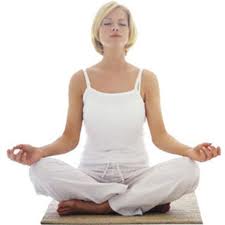
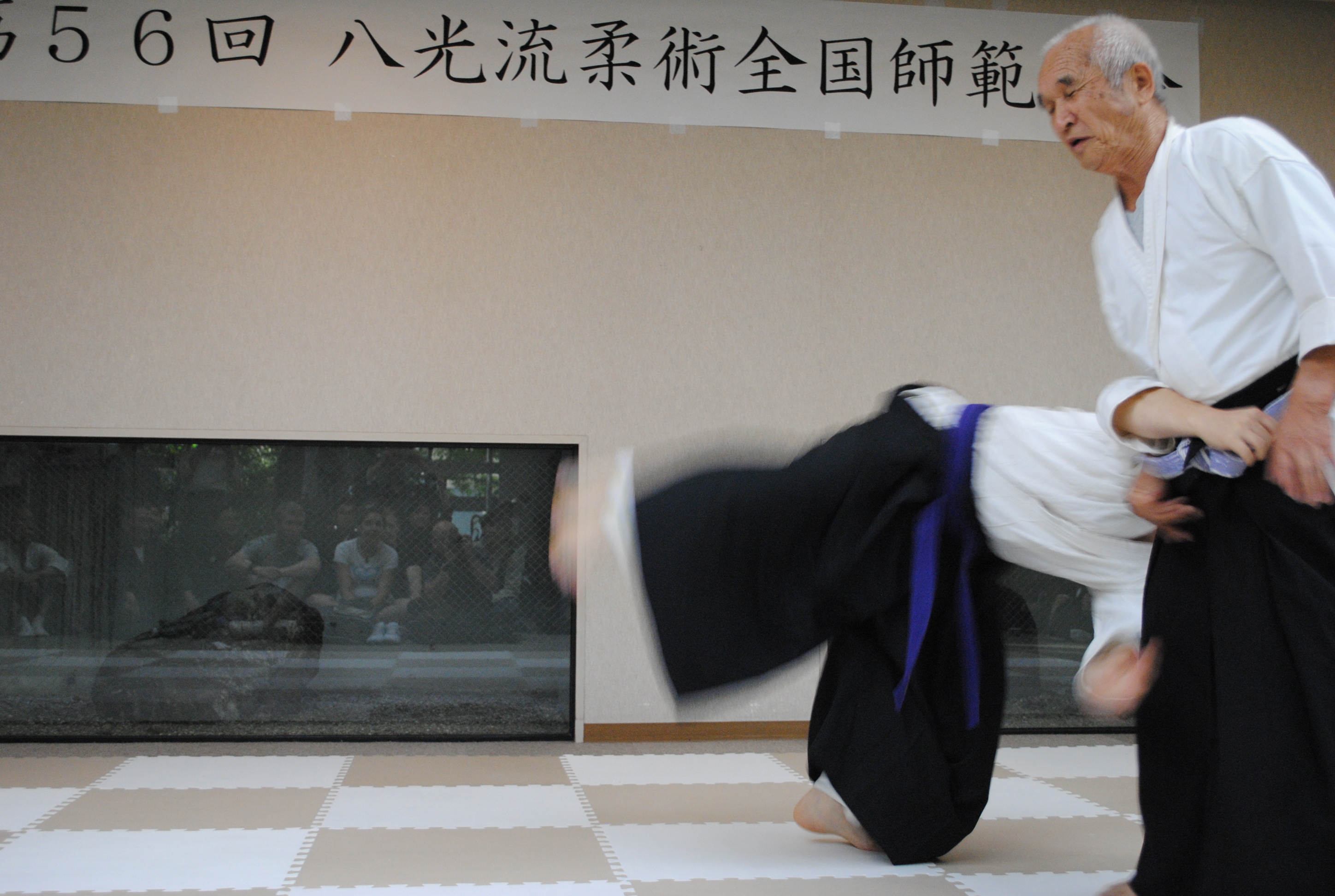
I often advocate students to defend like a wet blanket, attack like a wet tea-towel. Both require relaxation. Let me explain in a little more detail. Attacking like a tea towel is relatively simple. Relax and whip your techniques out explosively, pushing from the ground to initiate power and letting your weapon hand or foot deliver that power quickly and safely. You can practice this alone and with a variety of equipment, such as speed balls, punching bags, makiwara etc. You will feel the speed, power and snap of the flexible punches and kicks. With a little experience, you will gain confidence to attack in a relaxed manner.

Defending is a little more difficult. On the mental and physical side, people have a tendency to tighten up when faced with a threat. Keeping calm in the face of danger is much more difficult. Breathing exercises, visualisation training, full contact sparring and regular training will help, but there are no guarantees until you experience a threat for real. We cannot be certain how we will mentally or physically react, but we can develop the technical tools to defend efficiently.

Technically, we want to aim to slow the opponent down. We want our opponents to feel like they are stuck in quicksand, with every movement sapping their own energy. A faster or more powerful opponent’s advantage can be mitigated, making them feel like they are fighting underwater, if you use the wet blanket approach. This method requires the defender to be close to their attacker.

Example 1 – Striking:

Koryu Uchinadi tegumi drills are great to practice this concept. As an opponent strikes with a straight punch, parry with the `mirror hand`. (The mirror hand is your left hand if your opponent is punching with the right.) Rather than bash the punch aside, let the weight of your hand sit on the incoming punch. Next come underneath with the right hand to complete the soto-uke blocking motion. Let the weight of your arm rest upon the outside of upper arm (close to the elbow) of the attacking arm. Your arm should stick to the attackers punching arm, allowing you to feel any change in his balance. You have virtually nullified the ability to attack with either arm. Your weight resting on the attacker will make it very difficult for him to lift either leg without shifting his balance. You have minimised his attacking options, and have numerous counter opportunities.

Example 2 – Grappling:

It is possible to hang on an opponent from the bottom position, but the top position is a more obvious example. The sprawl is a prime example of using the wet blanket principle against a grappling attacker. Throw your legs back and drop the entirety of your weight on the attackers back. The more relaxed you are, the heavier you will feel, slowing the attacker down. If you sprawl with tension in your back, you may be pushed back onto your feet. Top position on the ground may not technically be considered a defensive position, but the wet blanket approach is essential in this arena as well.

So there you have it: less injuries, more speed, power, efficiency, flexibility and endurance and you can easily gain an advantage over a physically superior opponent. So, start now. RELAX and take your martial arts to the next level!!
Posted in Uncategorized | 5 Comments

Shuhari – the stages of learning

守破離

Shuhari describes the three phases of learning experienced in the martial arts. It is not a common term, even in Japan, but many avid martial artists are already familiar with it. Shuhari is not exclusive to martial arts, originally being used to describe the pursuit within different Japanese cultural arts, such as the tea ceremony. Nowadays (or perhaps just in my circles), the term ‘shuhari’ appears most often in martial art conversations. 

Shuhari describes three broad categories of mastery. The concept is that all students will proceed through these stages in this order, but certainly not all students reach the second or third stages. In fact, it would be fair to say that a large proportion of martial artists never progress past the first stage. Certainly in most systems, a shodan (first degree) black belt would not be expected to have surpassed the first stage, and a black belt grading may actually require the practitioner to be in this stage of learning, as it shows a commitment to the basics and loyalty to the style.

 The three stages of learning each are represented by one Chinese character (kanji), as follows. Each character has at least two ways, of reading it, depending on the context.

 守 Shu (Mamoru)    Copy

破 Ha (Yaburu)        Individualise

離 Ri (Hanareu)      Enlighten

 The first character 守 (shu)means to protect or obey. In this context, it refers to learning the basics exactly as taught, loyalty to the system, and protecting tradition. This stage of learning could be termed rote learning, the copy-cat stage. While this sounds negative, it is a necessary foundation to any form of learning. We can’t write a novel if we haven’t learned how to spell or string words together. Martial art instructors who teach exactly as their teachers taught them have remained in this stage of learning.

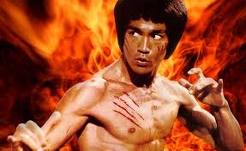
 破 (ha) refers to breaking traditions, researching, exploring, varying, improving on the basics. I think of this as the `Bruce Lee – Jun Fan` stage. Bruce Lee broke away from Wing Chun, but taught a variation of this art called Jun Fan Gong Fu. In this stage we adapt what we have learned to suit our own individual physiology, personality etc. This is the stage in which we objectively critique what we have learned. Poet Matsuo Basho advocates this stage of learning when he advised ‘not to follow the footsteps of past masters, but rather to seek for what they searched’.

師の跡を求めず、師の求めたるところを求めよ

 離 (ri) is the final stage identified in this progression, but it must be noted that the path is not a one-way street. It is common to take steps forward and backward. It is often said that once reaching `end` you will again find yourself at the beginning, only to know it for the first time. In this stage you will forget technique, and your body should move automatically according to the principles behind the techniques you have accumulated, creating new techniques as you move. Think of past masters Ueshiba Morihei, Kano Jigoro as examples of individuals who may have reached this level of transcendence. To use Bruce Lee again, he may have reached this phase when he created Jeet Kune Do.

Bruce Lee also spoke about this learning process when he said (to paraphrase), that at the beginning a punch is just a punch, a kick just a kick. After studying for some time you realise that there are many ways to kick and punch, but finally you realise that a kick is just a kick and a punch is just a punch.

Posted in Uncategorized | 2 Comments

Night #2

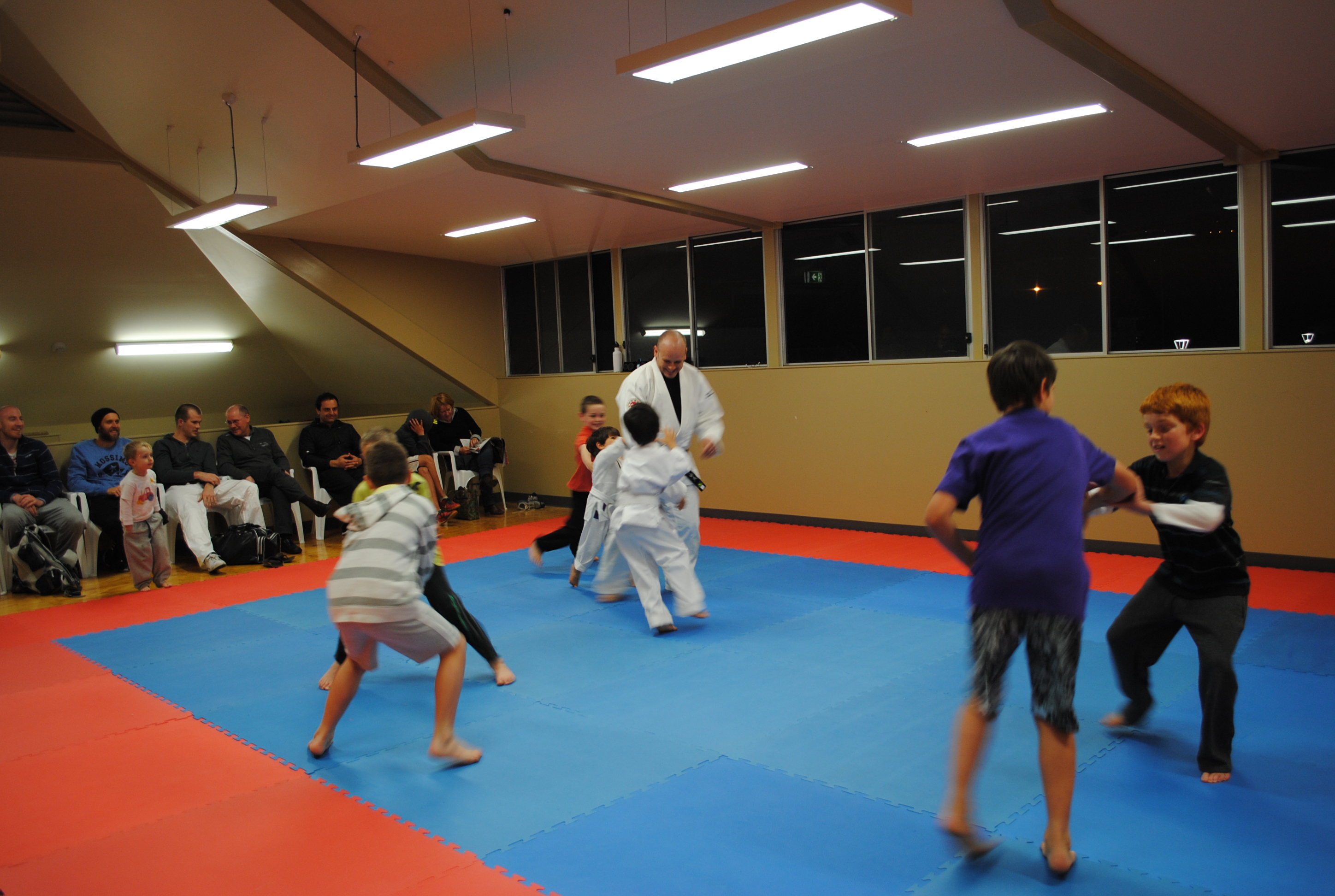
The first kid’s class and second adults class are in the books! I expected three children tonight, but was pleasantly surprised to find 7 eager young students between the ages of 3 and 10, with two more kids watching! Another group of 10 energetic souls participated in the senior class.

The kid’s class focussed on fun and interactivity, with a strong emphasis on self-defence. We mixed up the content, quickly moving between activities to keep the kids engaged without getting bogged down by aiming for perfect technique. We discussed self-defence, rules and safety. We practised pre-emptive strikes and escapes, breakfalls, kicks, hitting bags and everyone took turns wrestling with me! We all had a very fun session.

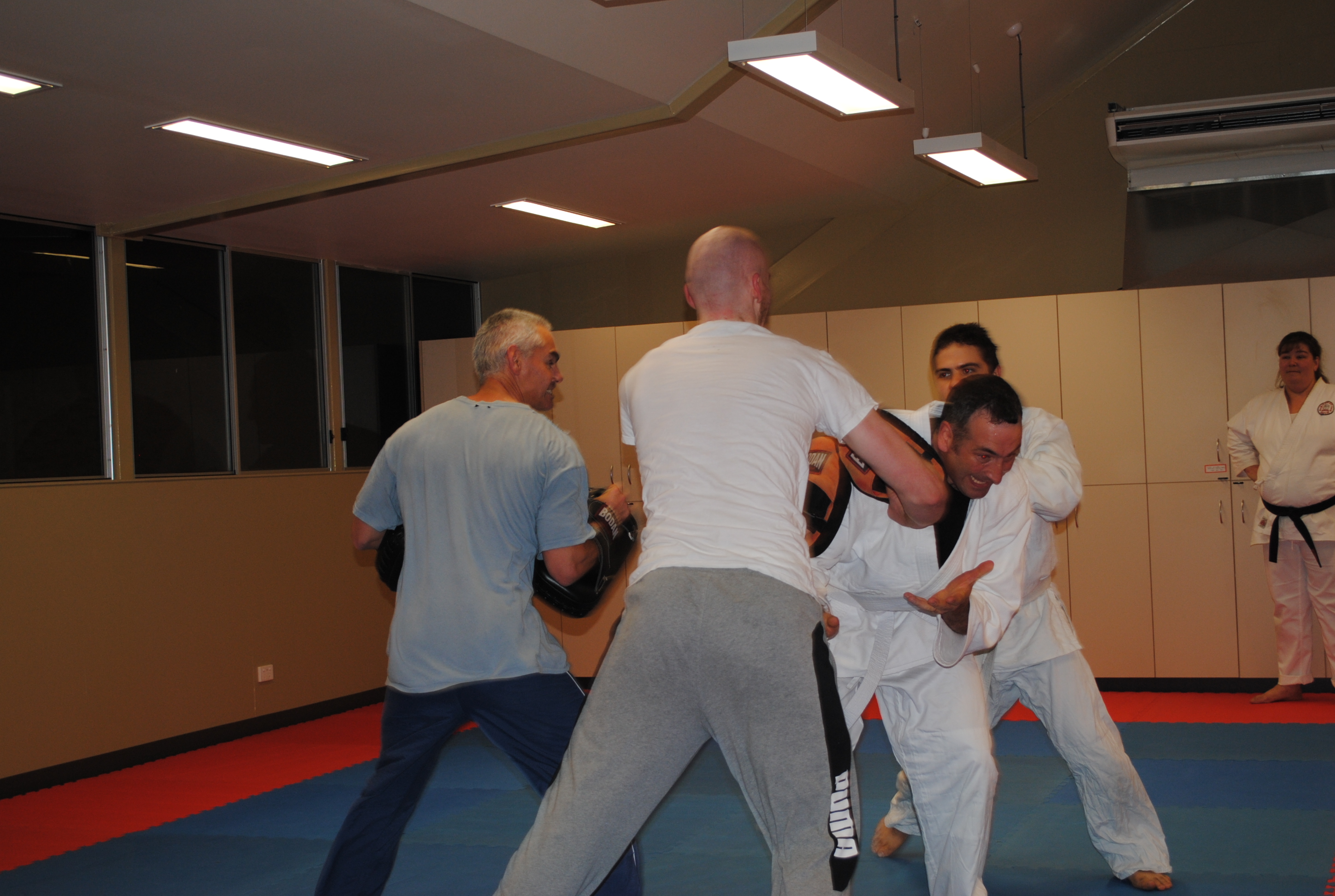
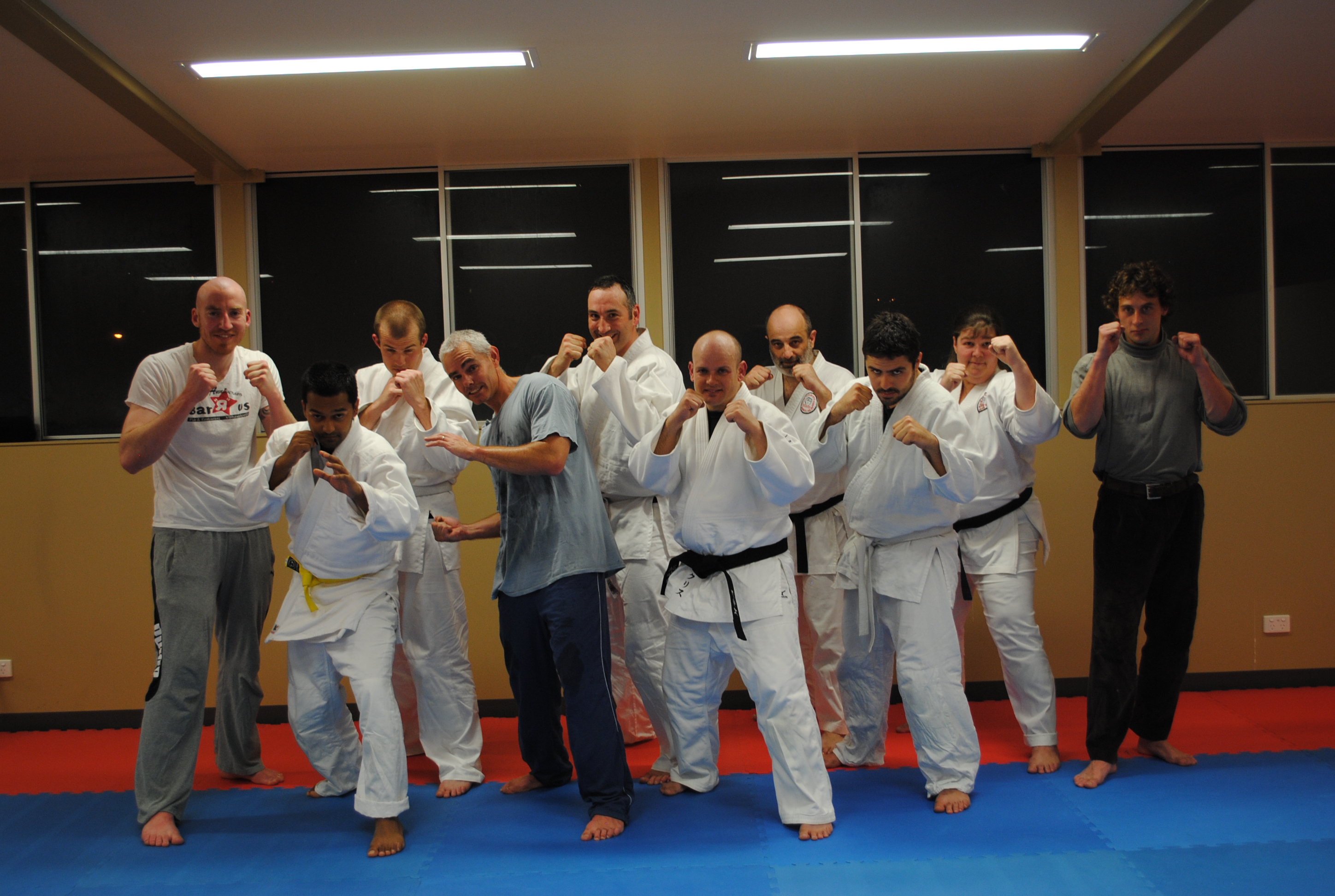
The adult class really looked the part, almost everyone had a gi, and we had two black belts (from another school) and Shane wore his yellow belt for the first time.

As per the SOBUKAN system, we practiced a range of skills including power generation, strikes, a judo throw, break-falls, escapes from the ground and from multiple attackers, and discussed some important guidelines for self-defence and martial arts, and touched on use of force matrixes. We finished with some visualisation of dangerous situations, which mentally prepares students for the adrenalin dumps experienced in crises and allows them to create contingency plans in advance, should the worst happen.

I have been elated by the energy, enthusiasm, and effort that everyone injected into the classes, both on Tuesday and tonight. I can hardly wait until next Tuesday – I think we will have to consider extra classes soon! Great work everyone!! Otsukaresama desu!!!

Posted in Uncategorized | Leave a comment

SOBUKAN kicks off!!

I was anticipating a modest start, but in the lead up to the SOBUKAN opening, it seemed like very few of the student candidates were going to make it for the night – apologies for business trips, illness and appointments kept rolling in. I was wondering if I was going to be conducting some solo kata drills for the first session, and wishing I had done some letterbox drops in order to spark interest in the new dojo. However, in the end we had a very respectable 10 bodies on the mats. I think this is a very solid start, and look forward to this growing in the coming weeks, months, years.

After a quick meet and greet, and a chat about the SOBUKAN motto –
healthier, happier, safer –
and my personal approach to martial arts training: to ‘eliminate weakness, develop strength and balance’. I will discuss these further in future blogs.

We warmed up with tegumi drills (see DVD#1 http://www.koryu-uchinadi.com), two-person counter drills that promote muscle memory and instantaneous recognition of hand attacks. We practiced ukemi waza (breakfalling) and touched upon a combination of judo throws. Next was ne waza (grappling) and students drilled a position transition drill to escape from underneath an attacker to get on top in the same dominant position. I then demonstrated some Hakkoryu Jujutsu (www.hakkoryu.com) to show students the technical sophistication they may expect as they progress.

Koryu Uchinadi DVDs, Bubishi, Kodokan Judo, Jiujitsu University, Hakkoryu texts

Then we got physical!! We started off with a game of ‘tap’, a game I use to teach 360 degree environmental awareness. We separated into groups of three and tried to tap the backs and knees of our partners, while protecting our own. Then it was time for ‘tap – battle royale’ – a free for all game testing students’ abilities to protect their backs in a brawl.

Four minutes. That is all we spent on fitness training. One minute each of push-ups, crunches, sumo squats and burpees with 10 seconds break in between. That was enough to challenge even the fittest in the dojo.

Mokuso (quiet reflection) is a chance for students to review the lesson. We trained our brains, visualising a violent attack scenario, and trying to win. This is an important, yet often overlooked aspect of martial art training.

SOBUKAN’s first grading!! How does someone grade on the first night of training?!
Shane Webster has been taking private lessons with me twice a week since April. After the class Shane received his yellow belt, the first coloured belt of five before black belt. Generally it is expected 6 – 12 months will be required to grade. Shane has drawn on previous martial art experience, and impressed me with his progress and enthusiasm. Congratulations Shane!!

Thank you very much to visiting karate instructors Shawn Donaldson (www.ku-sa.com), Roger Catchlove (bushidomartialarts.com.au), Julie Tynan (GKR) and Judo master Michael Headland (www.aujudo.com). Your support means a lot to me.

Now for the junior class – starting tomorrow, Thursday 29th September 2011… if the fun my son had yesterday is anything to judge by, we are going to have a great time!!

Posted in Uncategorized | 2 Comments

SOBUKAN kicks off Tuesday 27th September 2011!

Welcome to the grand opening of SOBUKAN!

SOBUKAN students will learn a range of the most effective Japanese martial arts in a traditional format. The mission of SOBUKAN is to enrich student’s lives by making them feel healthier, happier and safer. Please feel free to come for a chat or a workout on 27th September. All welcome!!

Times
The club opening is on Tuesday 27th September at 6pm for a special two hour class. Please try to arrive at least 10-20 minutes early to meet before class.

There will be no junior (Childrens) class on the first Tuesday 27th. Junior classes will start from 6pm on Thursday 29th September. This is in order to provide time to meet all first time students. Children are welcome to attend to meet and greet on Tuesday, but the class will be structured for adult students.

The regular class times are on Tuesdays and Thursdays at:
Children: 6pm – 6:45pm
Adults: 6:45pm – 8pm.

Location
Mitcham Cultural Village, Mezzanine area (above workshop), corner of Princes Rd & Torrens Street Mitcham. The training area is accessible via stairs only. My apologies to any prospective wheelchair students.

Clothes
If you own a white martial arts uniform with a white belt – wonderful! If you wish to purchase a uniform, please buy a plain white judo gi (uniform). However, there is no obligation to buy a uniform for the first month. Comfortable exercise clothes are fine.

Visiting instructors attending on the day should please wear their regular uniforms and belts.

Cameras
Cameras and video cameras are welcome for the opening class, but please obtain Chris’s permission before publishing or uploading any images into the public domain, such as websites, youtube facebook etc.

Bring
Bring your friends and family! Please ensure that you have at least 2 litres of water and an open mind. If you have health issues, please inform me before class and bring any medication as required.

Posted in Uncategorized | Leave a comment