Sobukan re-open!

Sobukan is back!
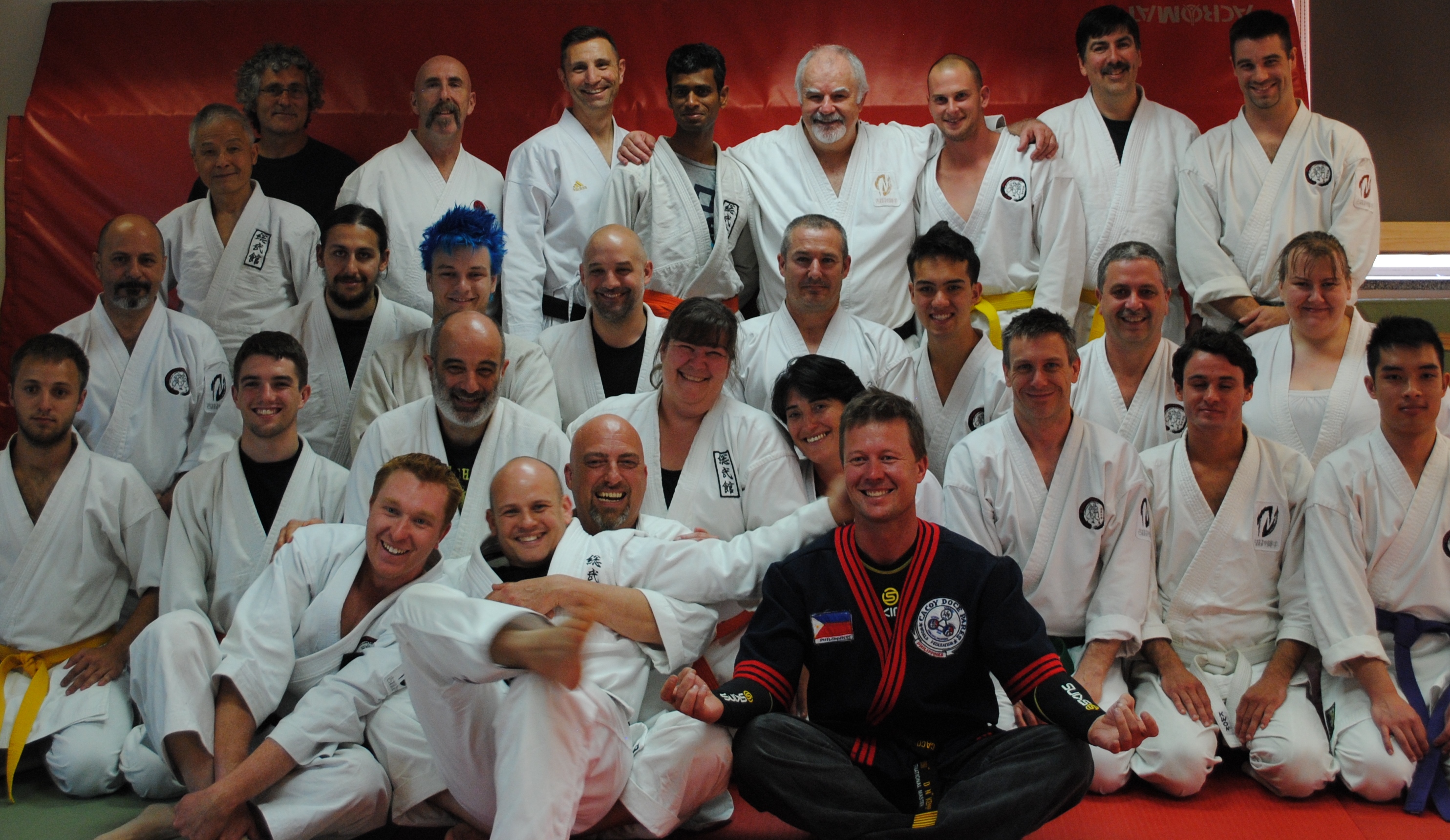
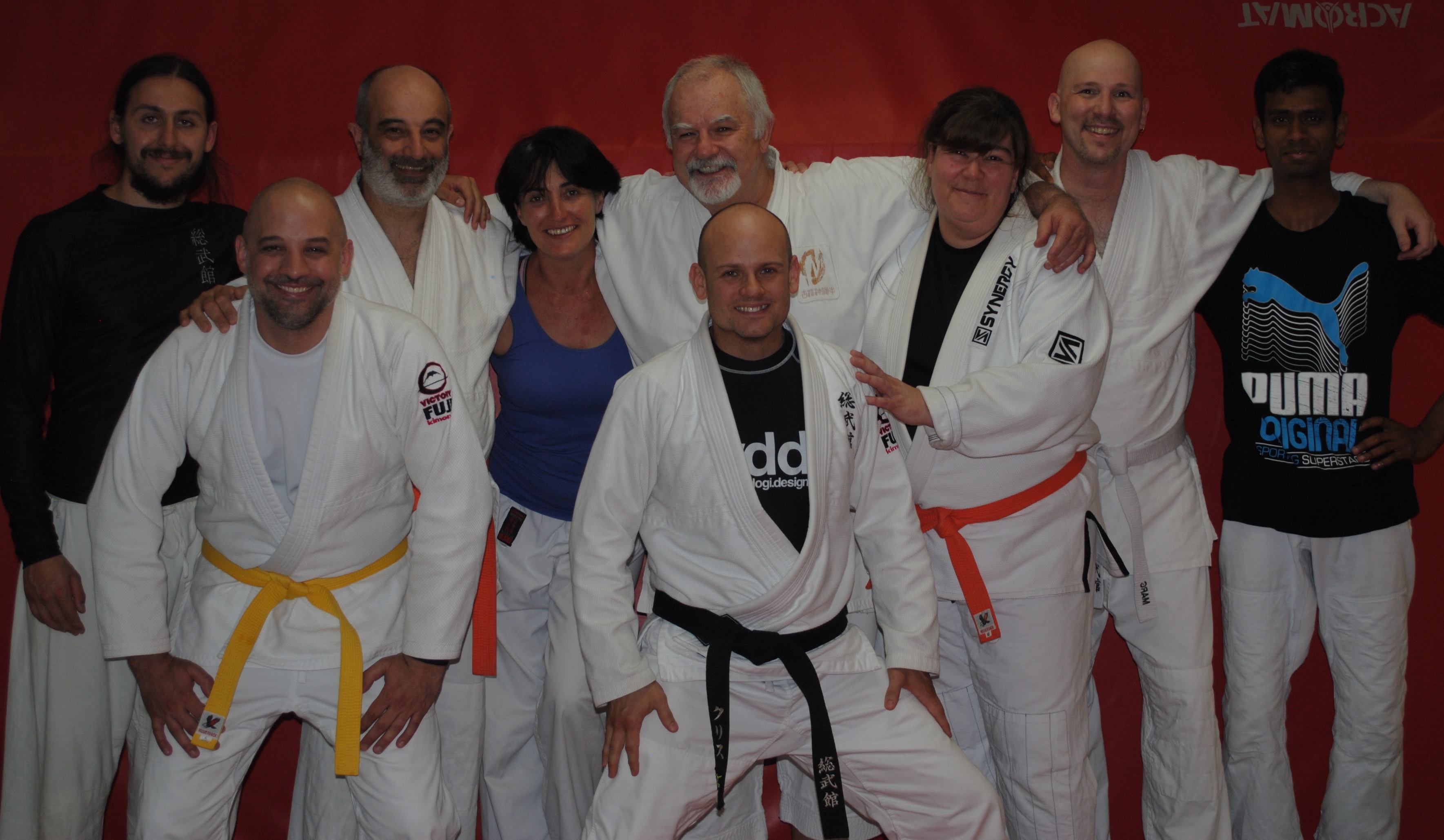
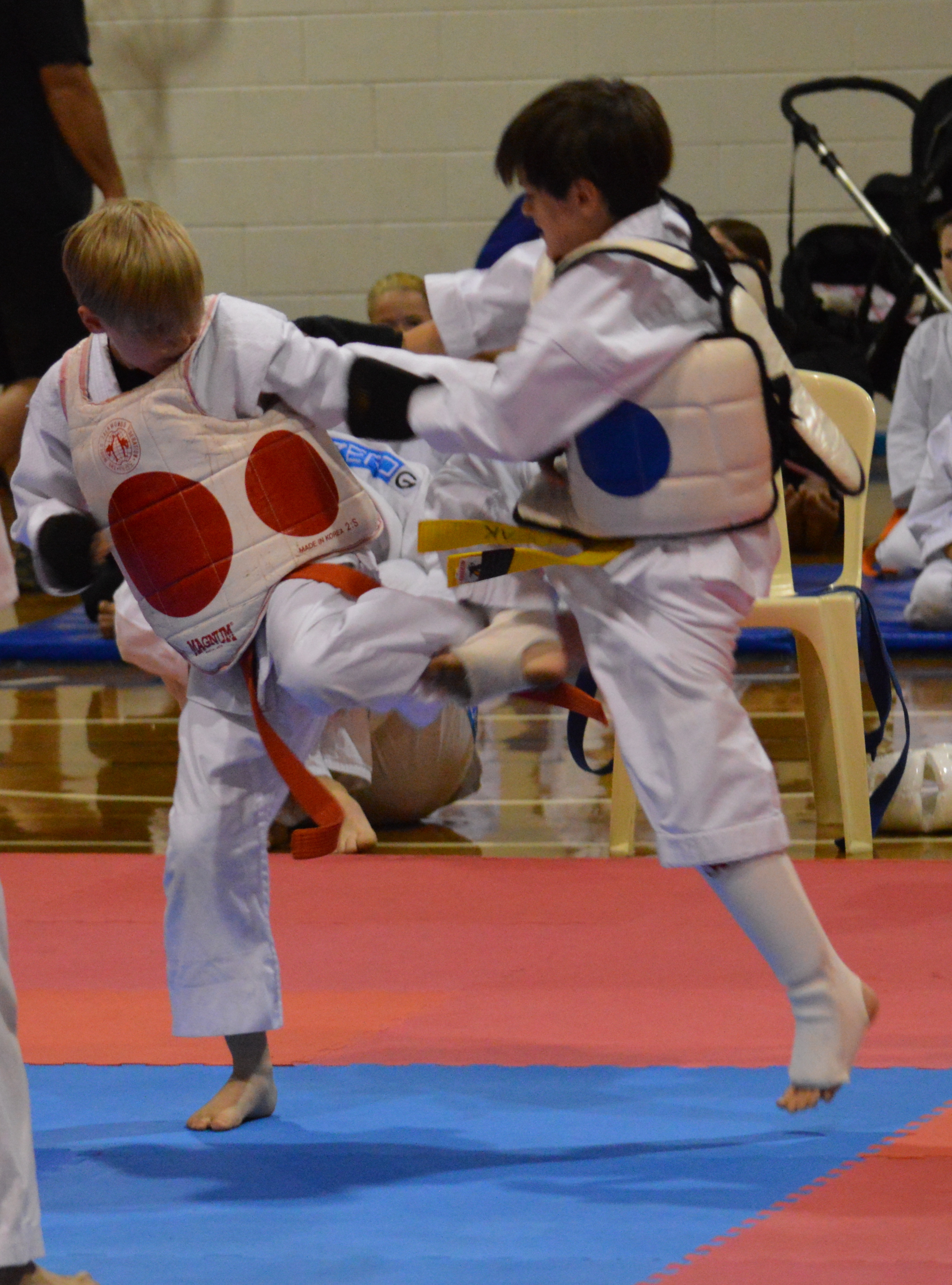
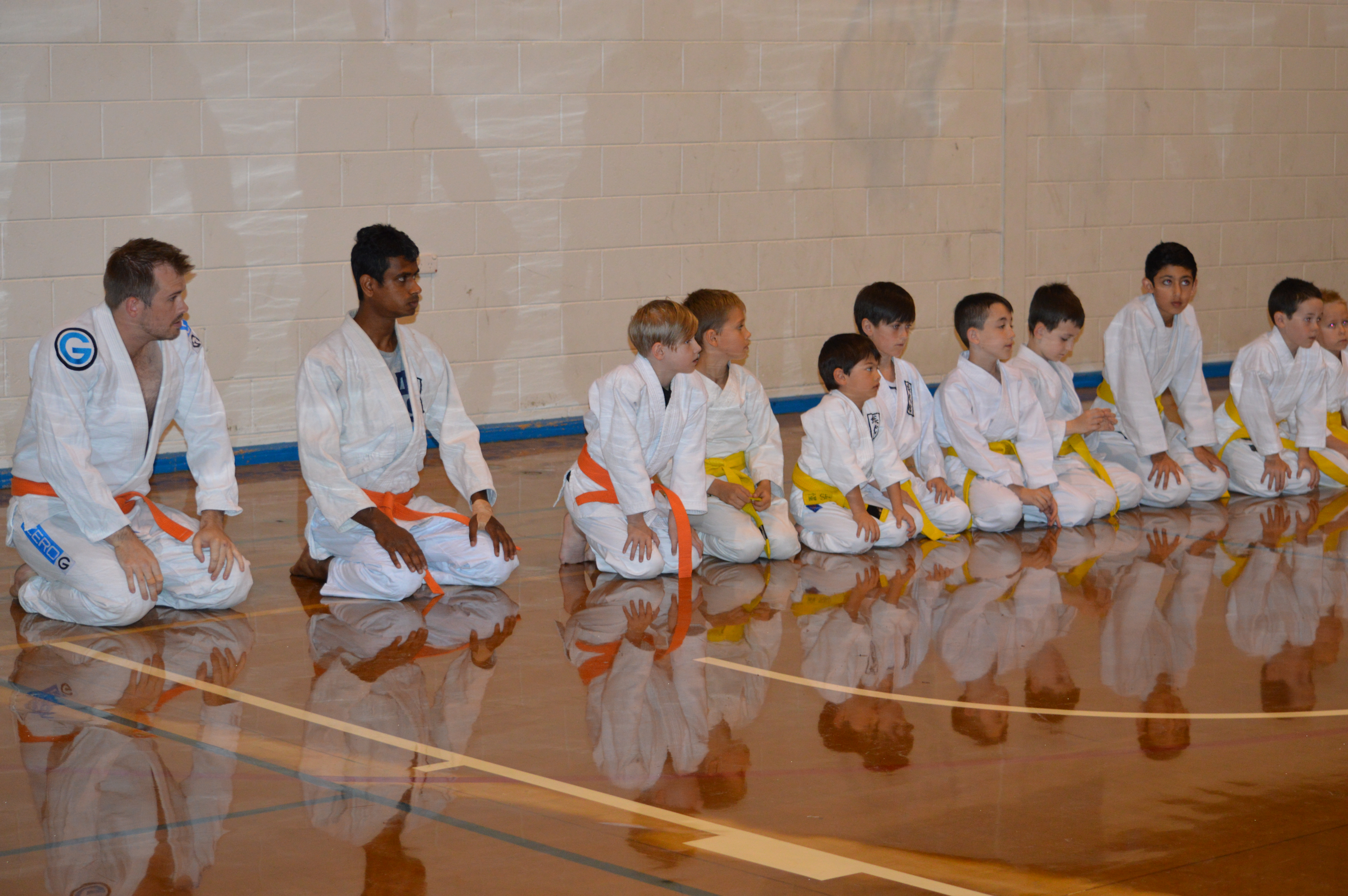
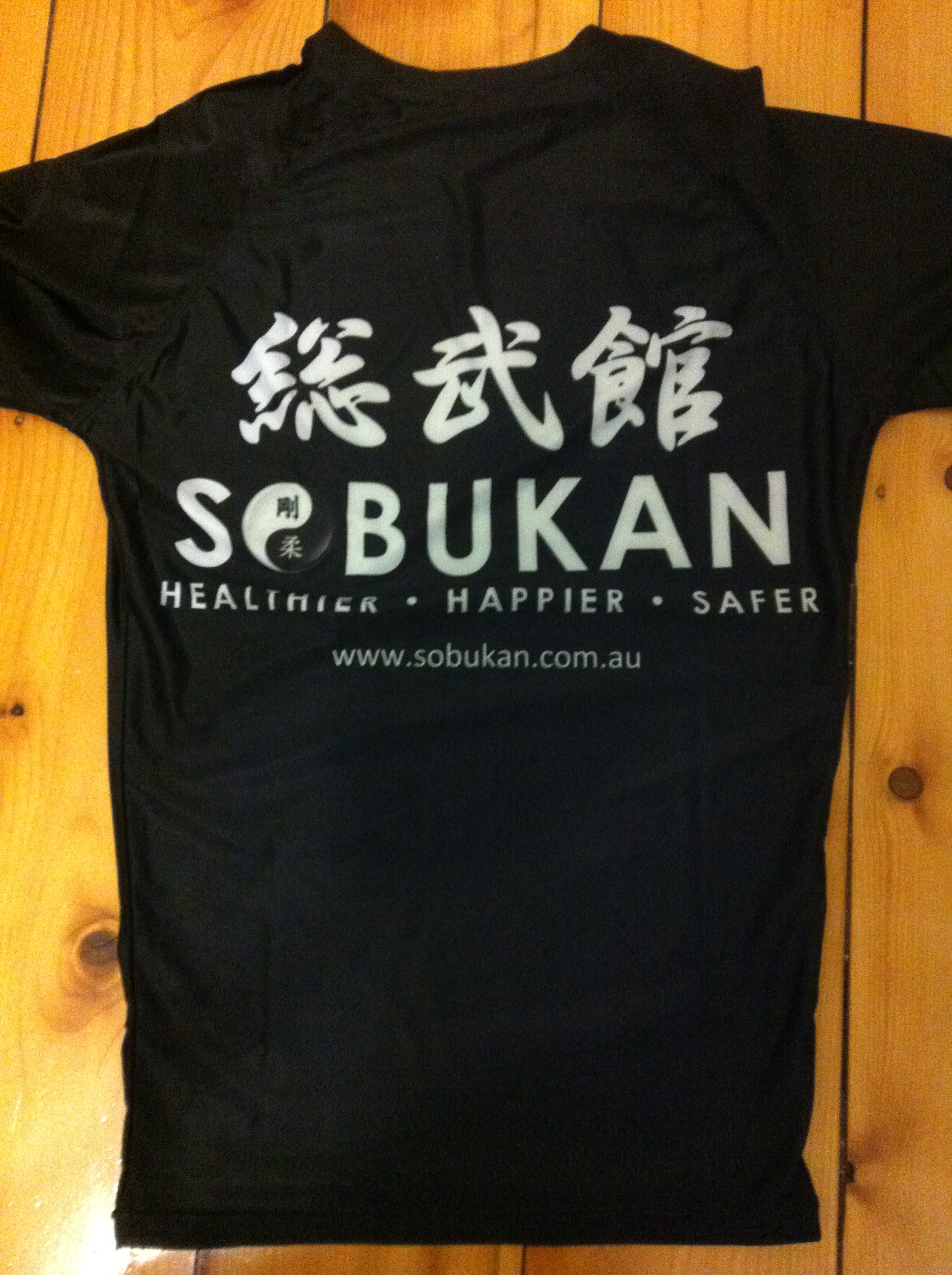
Thank you for your patience while I have been training in Japan over the past five weeks. The first classes are on Saturday May 3rd and I am fired up to share some of my experiences with you! Each week I trained at Daidojuku So-honbu (Kudo HQ) on Monday, Wednesday and Friday and at Hakko-ryu Jujutsu So-honbu (Jujutsu HQ) on Thursday, Saturday and Sundays. I also went and mixed it up with the young MMA fighters at Purebred Omiya (my old MMA/BJJ club) and trained in traditional Okinawan Goju Karate at Mushinkan Tokyo with Karate historian and all round good guy Joe Swift sensei. Daidojuku/Kudo is the strongest hard fighting style I have encountered, and Hakko-ryu Jujutsu is the ultimate in soft, intellectual technique that I have experienced. This trip has renewed my faith in the importance of balance of hard and soft – the yin and yang of the Sobukan logo.
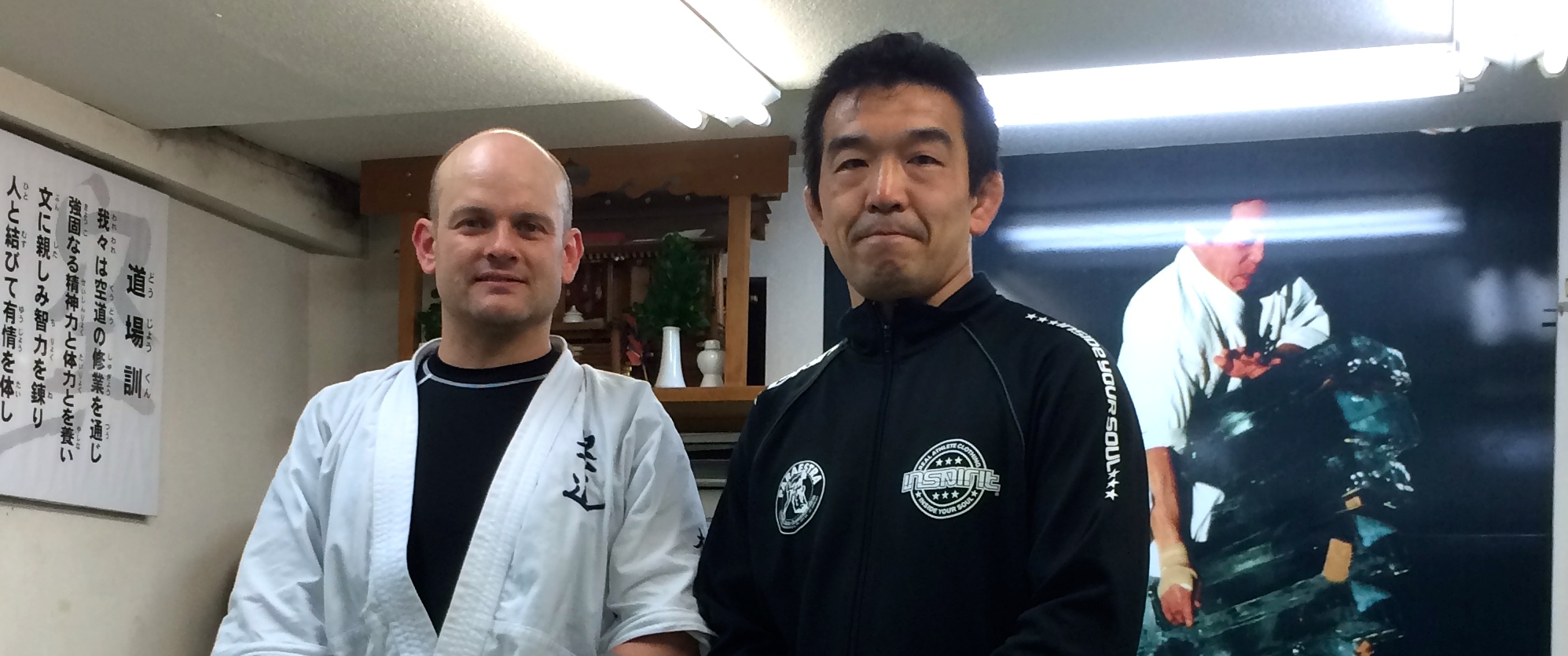
Nakai Yuki

Nakai Yuki

One thing this trip has reminded me of is the importance of training basic techniques and conditioning. Practice makes permanent! In order to keep classes fun, I have tried to avoid too much repetition in the past, especially with adult classes. However, all four of these famous dojos focus on perfecting basic technique in each lesson, and our classes will follow suit. I will introduce a technical routine to our classes that will cover the most important movements in the first 10-15 minutes of each class.

Purebred

Purebred

As mentioned previously, I have been planning to have two classes per week each for kata, kumite and jujutsu and kids classes. I will look at the possibility of starting karate-bu classes a little later, so that we can have a new kumite class between jujutsu and karate-bu on Saturdays. The dojo will not be available for us on Friday nights as hoped.
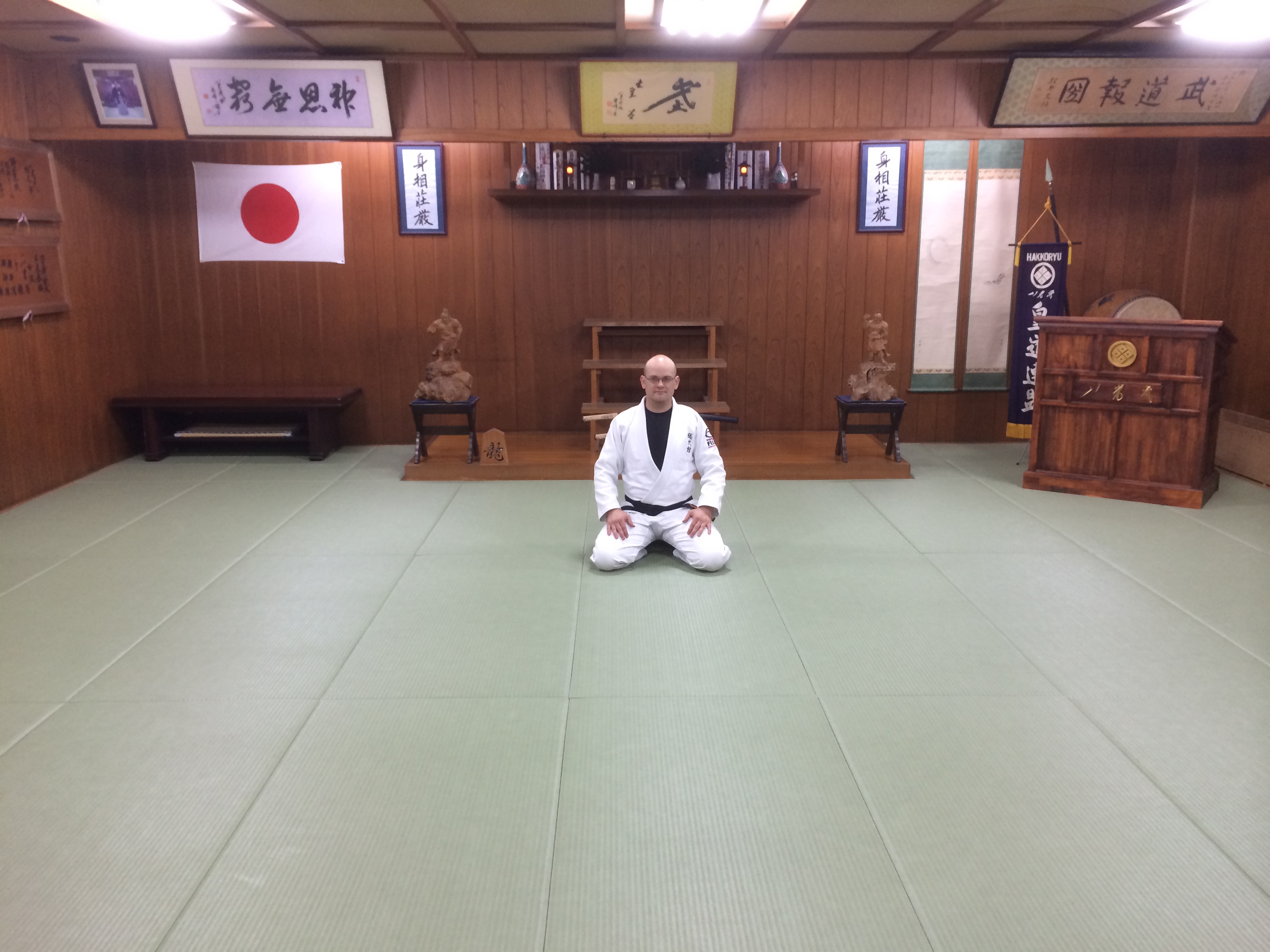
Hakkoryu Jujutsu So-honbu

Hakkoryu Jujutsu So-honbu

Congratulations to Raghu on Kudo grading!10298418_10152830536027178_1924199485141883381_o
Over the Easter break, Raghu travelled to the Australian Institute of Sport in Canberra to train with Jukucho and other Kudo luminaries. Raghu fought for, and was awarded 8th kyu in Kudo, making him the first person in SA to be graded in this comprehensive fighting method. Incidentally, I am the second person to be graded in Kudo. This martial art includes strong strikes from Kyokushin karate and Muay Thai, throws and takedowns from Judo and Wrestling, and grappling from Judo and BJJ. Kudo is one of the only combat sports to include headbutts and elbows, plus strikes on the ground. A full-face mask protects fighters against injury and the use of the dogi better prepares practitioners to protect themselves against violent confrontation on the street. It also allows a far greater range of techniques and combinations than regular MMA. Kudo is taught using a combination of ancient and modern training methods and is underpinned by traditional values and etiquette. As previously mentioned, I focused on learning as much about Kudo as possible while in Japan and will work towards the expansion of this system in SA, including hosting tournaments. Congratulations in your new grade Raghu, you have made us proud yet again!

Sports and Fitness Expo demonstration
Sobukan will demonstrate martial arts on the main stage at the inaugural Adelaide Sports and Fitness Expo at Wayville showgrounds on Sunday 18th of May. This will be a huge event, and I hope to have the support of all available Sobukan and Karate-bu members. Could everyone please advise me of their availability by Sunday 11th of May for planning purposes? Thank you!

The demonstration will include several elements of our curriculum including:
• Kids karate
• Tegumi
• Pad training
• Kata
• Knife defence
• Ground fighting
• Throws
• Multiple attacker skit
• Hakkoryu jujutsu demonstration by Umehara san (if available)
• Wheelchair jujutsu demonstration by Matt Shilcock (if available)
• Kumite demonstration by Sei and I

More information about this event is available at:
http://adelaidefitnessexpo.com

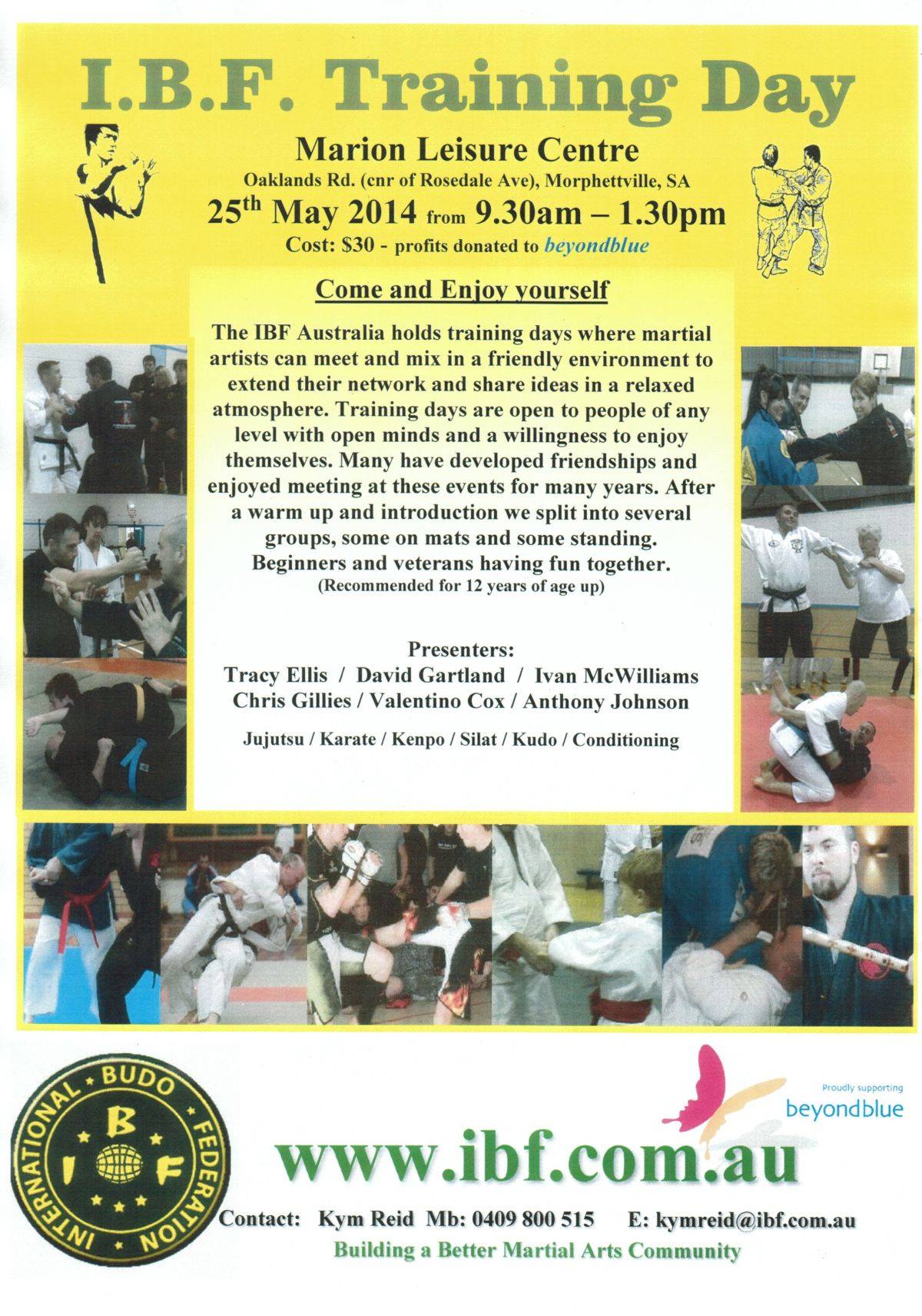
IBF Training Day
This is a great opportunity to train with a range of instructors in various martial arts, and build your network of friendly like-minded people – and its all for a great cause! As usual, I will be one of the instructors on the day. Recommended for ages 12 and older.
Marion Leisure Centre, Oaklands Rd, Morphettville
25 May, 9:30am – 1:30pm
$30 entry fee donated to Beyondblue
1556494_10201986820063860_6701626847908718595_o

Kotowaza 諺
十年一剣を磨く — Juunen ikken o migaku – lit. Polish one sword for 10 years.
十年の間ひとふりの剣を磨き続けるということから、長い間武術の技をみがき、武勇が発揮できる日にそなえるということ。 転じて復讐(ふくしゅう)の機会をうかがう意にも用いる。
This kotowaza advises martial artists to prepare for the worst by sticking to the basics. A secondary meaning is to wait patiently for an opportunity for revenge. Lets focus on the former meaning!

Technical lesson 技の紹介
Ashi sabaki – footwork.
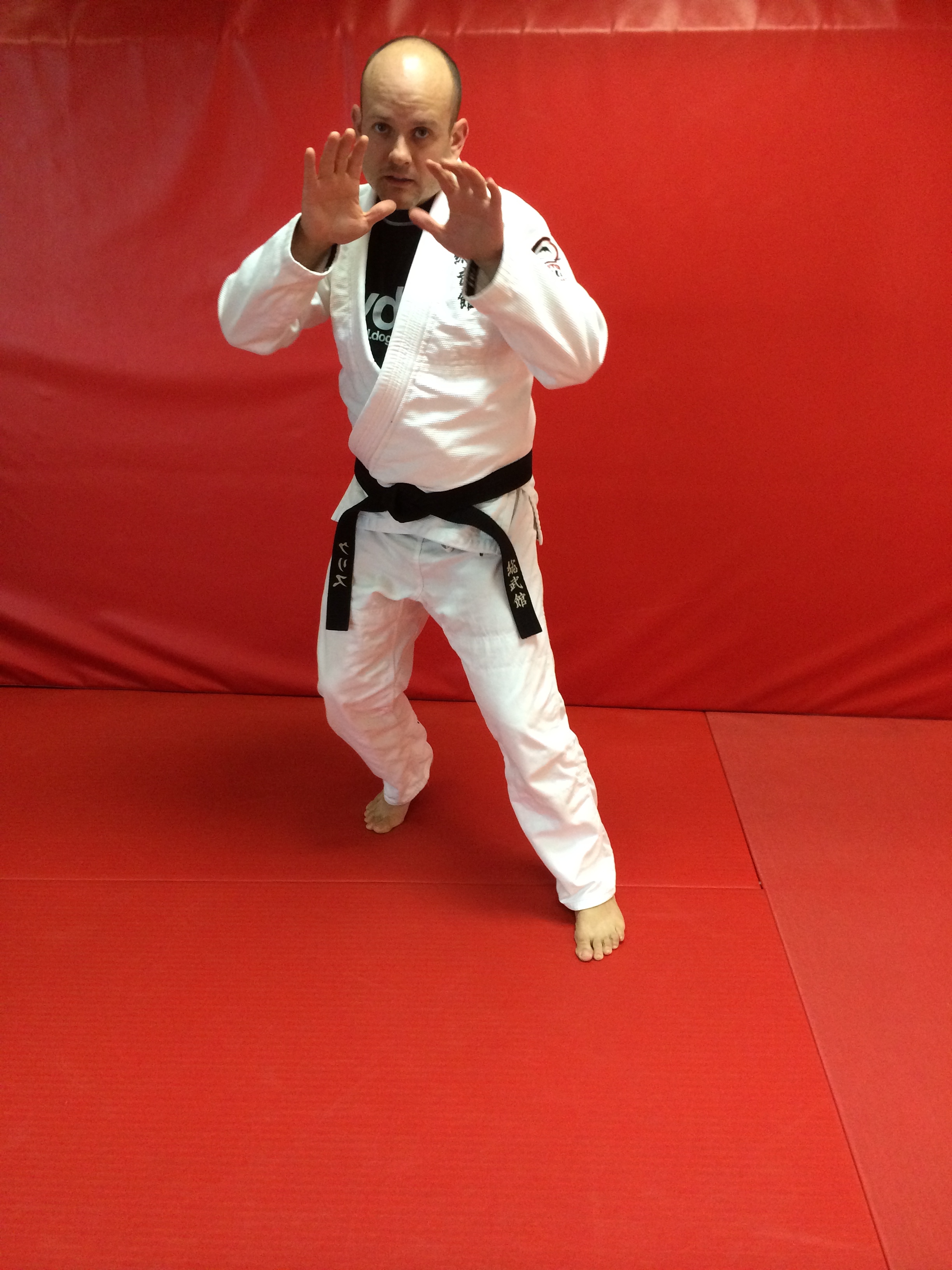
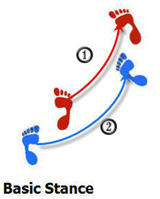
Before learning how to move, it is important to learn how to stand. The easiest way to make a natural fighting stance (kumite dachi, or moto dachi) is to casually walk a few steps. Stop after placing one foot on the floor in front of the other. This should be a comfortable length. Now ensure that your feet are hips width wide, and bend your knees slightly. Transfer your weight onto the balls of your feet, as if preparing for another step, but maintain vertical balance, with just the feeling of slightly leaning forward. In a one-on-one sporting confrontation you can lean further forward, but for self-defence, keep your balance more neutral so that you can be agile and dynamic, reacting to surprise threats from multiple attackers.
hirakiashi_right_complete

images-13
There are five basic types of foot movement:
1. Okuri ashi: lit. ‘sending feet’, but better explained as sliding. The safest and most common form of movement. The foot in the intended direction moves first, projected by the far foot. For example if moving forward, push off the rear foot and slide the front foot forward, then quickly drag the rear foot back to a comfortable fighting stance.
2. Ayumi ashi: lit. ‘walking feet’, stepping forward with one foot after the other. This footwork is risky, but is used for a fast attack or retreat – in the form of rushing or running.
3. Tsugi ashi: harder to translate, but close to ‘following feet’, ‘continuing feet’ or ‘next feet’. Bring the rear foot up to the front foot, then advance the front foot. Used in weapon arts in particular, but is a valid way of setting up a finishing strike, such as a right cross, when you have an opportunity.
4. Hiraki ashi: lit. ‘opening feet’, this refers to sideways movement. As in okuri ashi, move the foot in the intended direction first, then quickly pull the remaining foot back into a neutral fighting stance.
5. Suri ashi: lit. ‘sliding feet’. This is a principle to be employed with all footwork methods mentioned. Do not raise your feet too far off the ground. Try to maintain light contact with the floor with both feet as moving. This allows rapid changes in direction without exposing vulnerable balance flaws.

Posted in Uncategorized | Tagged , , , , , , , , , | Leave a comment

Sobukan closed for April

Just a reminder that Sobukan Martial Arts will be closed for the month of April, due to a training trip to Japan. We re-open for jujutsu and karate-bu on Saturday 3rd May, and continue with regular classes the following Monday and Wednesday. Sorry for the inconvenience.

Also, congratulations to our newly graded students: Geoff, Nathan, Kazuya, Shunyo, Lennon, Jade, Maddie, Tarcan, Stefan, Lucas, Mia, Marko, Diezel, James, and my own son Sei! Keep up the great work!

I will miss you while I am away, please practice daily and keep healthy, happy and safe!

Posted in Uncategorized | Leave a comment

Grading – date changed to Monday 24th March

Please note the change in grading test date. Please proceed to the dojo at 5:30pm or as early as possible on Monday 24th March, and remember your grading passport and $25 grading fee.

Good luck!!

Posted in Uncategorized | Leave a comment

March 2014

News ニュース

Sobukan closed for April

It has been a memorable month for my growing family: my son was born on 20th February, and Sei turned 6 on the 13th. We are planning to travel to Japan for the month of April for the obligatory visit to present my in-laws with their second grandchild. I will spend the month in Japan training in Kudo and Jujutsu, and hope to come home with a new trick or two to share with you! I apologise for the inconvenience, but this means that Sobukan’s doors will be shut temporarily for the month of April.

I will forward exact dates when decided, but I plan to be here for all of March and May’s classes, but none in April. Student’s paying monthly will not have fees owing for April, and for students paying annually, your membership will be extended for a month. Again, I apologise for the break, but I would like to remind everyone that unlike most clubs, Sobukan does not normally break for public holidays and only for approximately one week over Christmas and New Years’.

Grading – Wednesday 26th March

images-3There are a few students who were unable to make the last grading due to other commitments (particularly those attending Goodwood Primary School) or illness. On Wednesday 26th March we will hold a grading test in place of regular classes. If at all possible, please come to the dojo by 5:30pm. The grading fee is $25 and please bring your grading passport. Opportunities will be available for self-training or training with other senior students for those not attempting to grade this time. Most of the grading criteria for yellow and orange belt candidates is now available on video. If you need a reference for home training, please see me with a USB drive.

Do not train if…

I am stating the obvious really, but if you have a contagious disease or are even slightly affected by alcohol or other substances including medicine, please do not come to the dojo. Our members expect to be happy healthy and safe at the dojo. So please stay home if you have had a drink or are sneezing!

Image

Demonstrations

Due to my trip to Japan, it will probably not be possible to participate in the annual Kodomo no Hi Japanese festival this year. However, Sobukan will be featuring in demonstrations at the inaugural Adelaide Sports and Fitness Expo at Wayville showgrounds on the 17th and 18th of May. This will be a huge event, and I hope to have the support of all Sobukan and Karate-bu members.

The demonstration will include several elements of our curriculum including:

  • Kids karate
  • Wheelchair jujutsu demonstration by Matt Shilcock(if available)
  • Tegumi
  • Pad training
  • Kata
  • Knife defence
  • Ground fighting
  • Throws
  • Multiple attacker skit
  • Hakkoryu jujutsu demonstration by Umehara san (if available)
  • Kumite demonstration by Sei

More information about this event is available at:

http://adelaidefitnessexpo.com

Sobukan goods  総武館グーズ

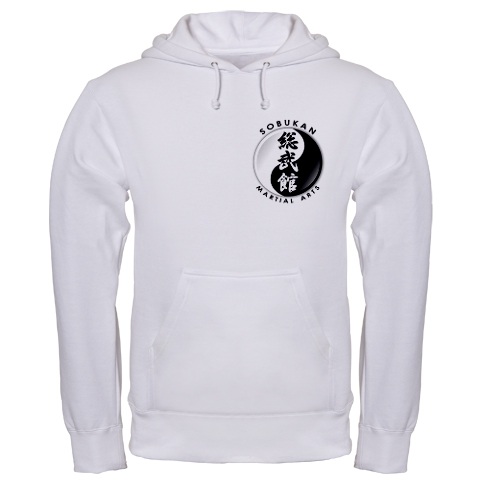
You can now purchase Sobukan merchandise! Surely never was there apparel so trendy!

Approximate prices follow. I know there is a way of ordering directly, but for the time being, please email me any orders to save on delivery costs.

Prices

Men’s hoodies (women’s available soon) – $80

Kids hoodies $50

Performance T-shirts (quick dry for training) $55

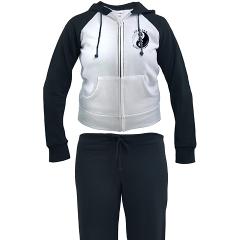
Women’s tracksuits $90

1lt drink bottle $30

Kotowaza 諺

真剣勝負 — shinkenshobu

Shinkenshobu literally means ‘duel with a real sword’ and alludes to a fight to the death. This phrase is used to encourage people to get serious. For example, ‘人生は真剣勝負だ’ means ‘life is not a practice run – so do it well!’.

Image

Technical lesson 技の紹介

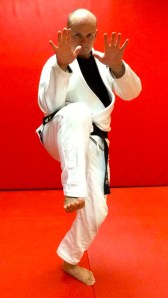
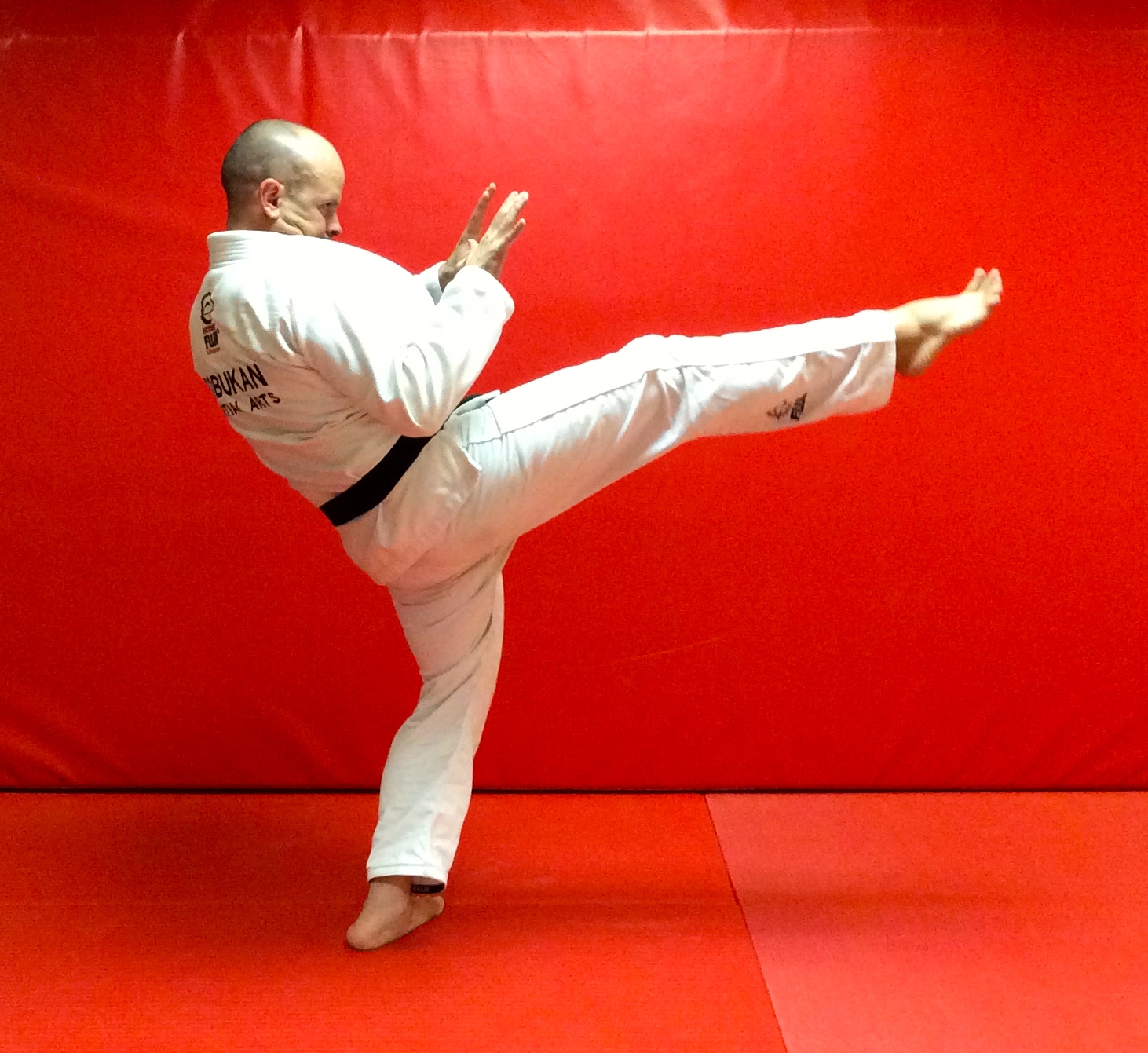
回し蹴り              Mawashigeri – roundhouse kick

Although rare in traditional karate, mawashigeri is now one of the more common kicks in competitive fighting, such as kickboxing or MMA. Mawashigeri is the only basic kick that does not travel in a straight line – the trajectory is from outside of the body to the target in a roughly horizontal plane – which makes it difficult to avoid, especially when combined with straight line kicks, punches or takedowns. Mawashigeri is also amongst the most powerful of the kicks, and it is relatively simple to learn how to generate power in the kick.

There are many versions of mawashigeri with varied applications. Some of the most commonly seen variants are due to modification for non-contact competition, including snapping the kick from the knee and making contact with the instep. These sacrifice power and safety in return for speed and distance and are not recommended for self-defence or realistic sparring due to the risk of injury to yourself and ineffectiveness of the kick.

When setting up a right leg mawashigeri, explode of the right toes and slide your left foot forward on an angle outside your opponent’s body. The angle depends on the distance and target. Extend your right hand so that it appears to the attacker that you are trying to punch them in the face. However, bring the hand across the opponent’s body and use it to trap his/her right hand. Swim the right hand across the opponent’s body until your hand is in front of his/her face to obstruct their vision. This swimming motion will help you engage your right hip. Extend the right leg and swing it into the target (usually the leg, ribs or head/neck) using the shin. An essential detail is to spin your body sideways at contact and point the heel of the foundation (left) leg towards your target. If the kick hits the target, use the point of contact to push away and return to your fighting stance. If the kick misses, spin your entire body 360o and return to your stance.

ImageImageImage

The part of the foot used to kick depends on the target. See the table below for details:

Target Weapon
Calf/Thigh Lower shin
Floating ribs Shin or ball of foot
Head/neck Shin (or instep if wearing sturdy shoes)
Posted in Uncategorized | Leave a comment

February 2014

Could it be? Has the first month of 2014 already slipped by? With a continuing heatwave, we are waiting for some students to resume their training routines this year. A number of changes are in the works!

We have implemented a new student management system. Rather than the manual sign in book and a plethora of excel spread-sheets, we now have a computerised sign in system. I have been taking photographs and will issue student membership cards with your unique student number soon. This will help improve communications and record-keeping.
We will be trialling a new class structure – please see details below.

I have started recording the syllabus for self-study outside of class. The yellow belt syllabus has been recorded. Next I will record the kid’s five Heian kata. It may take a little while before these are available to students, but they are in the works. Please be patient with me!

I know that many students who were unable to attend the Dec 2 grading are keen for a make up test. We have a new addition joining our family within weeks, and I will try to select a time and date for this test in the near future, but may need to wait until after the birth…

Thank you to Umehara san for hosting our annual kakizome session on Saturday 11 January. I have selected the following character, which in its simplest form can be translated as progress. If you have three ceramic cups of warm sake, spin around three times, squint your eyes, and tilt your head to the left, you may be able to view this character as a man dragging a heavy load forward. I have deliberately chosen the base form of this kanji to include multiple meanings: personal progression, assisting my students and family in their development and continuing to carry the dojo forward.

shin / susumu / susumeru

New class structure 時刻表
While almost everyone – well adults, at least – articulates their reason for commencing as one or more of self-defence, health/fitness, competition, or self-improvement through the auspices of martial culture, we maintain or lose or motivation for different reasons. Age, gender, occupation, physicality, psychology, background, health etc all play a part in our enjoyment and the perceived relevance of training. At Sobukan, we have quite defined groups of students who enjoy particular elements of our training more than others. Some enjoy high intensity, highly competitive training, some enjoy exploring ancient fighting methods from kata and associated practices. A rare few are equally interested in all aspects.

Managing the different expectations is a delicate balance, as some everyone wants something different. Until now, my intention has been to focus less on what students want, and more on what they need. However, the diversity of our student base requires a change in approach. From this week, we will trial specialised classes for adults, so that students can take more responsibility for their own learning. The classes will be shorter, but more of them to fit busy schedules.

This week I will trial a new class structure for the adult’s classes. After a trial period, I will meet with some senior students to discuss the merits of each structure and make a decision on the future of the classes. Currently, here is what I have in mind. An explanation of each class follows.

Monday
6pm – 6:50pm: Kids class
7pm – 7:50pm: Kata class (adults)
8pm – 8:50pm: Kumite class (adults)

Wednesday
6pm – 6:50pm: Kids class
7pm – 7:50pm: Kata class (adults)
8pm – 8:50pm: Jujutsu class (adults)

Friday? – to be confirmed, plan to commence by mid-2014.
6pm – 7pm: Kumite class (adults)

Saturday
10am – 11:30am: Jujutsu class (adults)
12:40pm – 1:30pm: Karate-bu (Japanese school students)

Class explanation
Kids: Combination of karate and judo technique and etiquette with a self-defence emphasis, taught in a fun, safe manner. Ages 5 – 14. Parents may join in with prior arrangement.

Kata: Sobukan syllabus class, with a focus on drills from Koryu Uchinadi Kenpo Jutsu, karate, judo and training exercises unique to Sobukan. Skills will include striking, throwing, grappling, submissions, chokes, arresting, weaponry and defences of the same. These classes will be technical and relaxed, with medium intensity. This is where you learn the ‘art’ in martial art. Participation in these classes will be required for belt promotion. Ages 12 and above.

Kumite: Physically challenging sparring class, with a focus on developing and implementing skills learned against progressive resistance. Classes will focus on combinations, counters and conditioning, and training methods will include shadow sparring, bag and pad work, and various forms of contact sparring including boxing, kickboxing, shoot-fighting, kudo, grappling, slap-grappling, and MMA sparring. Ages 18 and above.

Jujutsu: These classes will focus on arresting and wrist locks techniques from Hakkoryu Jujutsu, Judo throws, chokes and joint locks and grappling from BJJ. Ages 15 and above.

Karate-bu: Similar to kids classes, but training is held at the Japanese Community School and participation is limited to students of the same. Instruction in Japanese only. Ages 5 – 16.

Sobukan goods 総武館グーズ
You can now purchase Sobukan merchandise! Surely never was there apparel so trendy!
Approximate prices follow. I know there is a way of ordering directly, but for the time being, please email me any orders to save on delivery costs.
Men’s hoodies (women’s available soon) – $80
Kids hoodies $50
Performance T-shirts (quick dry for training) $55
Women’s tracksuits $90
1lt drink bottle $30

jumper_hoodie kids_custom_hoodie performance_dry_tshirt stainless_water_bottle_10l womens_custom_tracksuit

Kotowaza 諺
精神統一 Seishintoitsu
Seishintoitsu is a romanticised concept often found in Eastern martial art movie, but one that has inspired many a student. It is a spiritual goal of many advanced martial artists or religious folk: the ability to focus all energies on a single goal. It is the joining of spirit and body. The samurai required this devotion to their duties in order to make the sacrifices required to serve their lords and bring honour to their families.

Technical lesson 技の紹介
前蹴り Maegeri – front kick
One of the simplest, most versatile and most effective kicks is the humble maegeri, or front kick. This is usually the first kick a new student will learn when entering the dojo. While there are many variations, let us look at the basic maegeri. The basic premise is to kick an attacker directly in front of you, so there is no need to spin, jump, twirl or somersault. Therefore it is a relatively safe kick to use, and you can use it to stop an advancing attack, push away an attacker, counter punches, wind or double over an opponent or even to finish a conflict.

The four steps of the kick are repeated in any straight kick. Failure to execute any of these steps can lead to the kicker injuring themselves or being exposed to counter attack. They are:
1. Up: raise the knee until it is just above pointing straight at the target
2. Out: kick the foot out and make contact with the target (more on this later)
3. Back: bring the foot back, maintaining balance
4. Down: place the foot back on the floor in a controlled manner.

The part of the foot used to kick depends on the target. See the table below for details:
Target                                  Weapon
Foot/ankle/knee               Heel, with toes angled outward
Groin                                   Instep/ankle/shin, with toes pointed down
Body/throat/face              Ball of foot – foot outstretched, toes bent up and back

IMG_0056IMG_0063

Posted in Uncategorized | Leave a comment

January 2014 – Happy new year!

Happy New Year! I hope you had a healthy, happy and safe Christmas. A little rest and recovery (even if less than two weeks) is also important, as overtraining is a real hurdle to physical progress. I have been riding to Glenelg in the mornings for some solo beach training, which I have been really enjoying. I certainly feel refreshed, and excited about resuming training for our third year.

We kick off 2014 with training on Monday January 6th. I look forward to seeing you on the mats again soon. New years are a convenient time to consider what you have done well in the past year, and what you can do better. While I don’t know that ‘resolution’ is the most appropriate word, it is a good time to reassess your position in life and make adjustments to ensure that you are travelling in the right direction. Openly discussing your goals for the year adds accountability and can be a motivating factor for some individuals. Therefore, I will articulate some of my personal goals for 2014:
1. Judo black belt – this has been pushed to the side for a while, as I have had my brown belt since 2008. Now it is time to bring my judo up to a level where I feel comfortable accepting this milestone.
2. Travel around Japan – sometime during 2014 I will take a break from Sobukan to train and travel in Japan. I will keep you all informed.
3. Spend time with my family. We have a baby due in February, so I will need to direct more of my time towards my growing family.

I also have some exercises planned for Sobukan:
1. I will further explore the relationship between our arts (jujutsu, karate, shooto, judo) and experiment with ways to improve the fluidity for application in combat and self-defence.
2. I will re-evaluate our class structure later in the year to consider the value of adding/separating/rescheduling classes. Do we want to add separate classes for Kudo, Hakkoryu jujutsu, KU, combative grappling?
3. Develop specialists in various aspects of our syllabus and cultivate leaders who can assist with junior students and lower grades to allow me to divide my time more equitably, in particular with higher belts.

After jujutsu on Saturday January 11, Umehara san will again conduct a kakizome calligraphy session. Kakizome (書き初め) literally means ‘written beginning’, and is an opportunity to think about what you would like to achieve in the new year, decide on a theme, and express that theme in a single, or multiple Japanese characters. If you can think of a theme, Umehara san and I will help you translate them into a Japanese expression, which we will brush in Japanese calligraphy. I hope you can be there.

Last year I selected yashinau, which means ‘to nuture’ or ‘to raise’ and is used in relation to growing crops, raising children or helping students develop. I am proud to say that I feel that I fulfilled this in 2013. I have a growing family, with another child due in February, my son is doing well at school and in his martial art training, and our students are developing great skill, with Sobukan’s first three green belts awarded recently.

yashinau

I am still considering my ‘theme’ for 2014, but I am excited about exploring a number of new drills and skills now that we have students reaching the intermediate levels. This milestone opens a new level of training including advanced locks and chokes, kicks from the ground, clinch wrestling, guard sweeps and passes, and solo and two person kata as well as a number of new throws.

We have a number of new belt colours adorning both the Sobukan dojo and the Japanese Karate-bu. Approximately 20 of the 30 grading candidates passed outright, and more are finishing off their tests soon. Of particular note is that we now have three green belts: Max Wright, James Palmer and Steven ‘Pacey’ Pace. The adult class is now very ‘orange belt heavy’ and we have more people ready to move into the intermediate ranks very soon.

Thank you to those who attended the Christmas gathering on Sunday December 22. This was a casual, low-key affair at Glenelg beach. The adults chatted while children (and Umehara san) buried each other in the sand; we learned some new kata (including solo and two person for kamae waza); and compacted every nook and cranny with sand while wrestling on the beach. We also played mini golf, with Pacey taking out the win. Ran and Rei Mizuno were amazing to watch. It was the young girl’s first foray into mini golf, and their systematic approach and rapid improvement was incredible. Max and James Wright could not hide that they were father and son – their styles were identical!

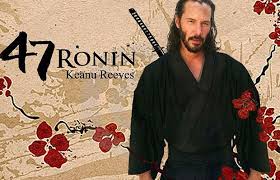
Movie tickets – 47 Ronin 映画券
I have some tickets to give away to see 47 Ronin with Keanu Reeves at Hoyts Cinemas Norwood on Monday 13th January – meaning that the recipients will unfortunately need to skip Sobukan training on that night! Anyone who introduces a friend or family member who joins before the movie night is eligible to receive two tickets – until they run out!

Kotowaza 諺
不言実行 Fugen jikkou
Shut up and train. Less talk, more action. Actions speak louder than words. Don’t talk about it, just do it.
I think you get the message, lets move on…

Technical lesson 技の紹介
The six basic “blocks” of karate are rarely actually blocks – the moves have a number of applications including strikes, escapes from grabs, chokes, submissions and of course, defensive movements.

They are:
1. Age uke (rising block)
2. Gedan barai (lower sweep/parry)
3. Uchi uke (inside block)
4. Soto uke (outside block)
5. Kake uke (hooking block)
6. Shuto uke (sword hand block/chopping block)

Each ‘block’ consists of two basic movements. Contrary to popular belief, the more subtle first movement – not the second, more recognisable movement – usually defends the immediate attack. The basic function of the second movement in the block is to counter improve the defenders position in relation to the attacker, ie to disrupt their balance or to turn the attacker.

Age uke
Parry an incoming punch with the mirror hand and then deflect the attacking arm upwards while stepping forward with the opposite leg. This will expose the attacker’s ribs and rock them back on their heels, disrupting their balance.

Gedan barai
Parry a lower punch or kick with the mirror hand and then cross the other hand across your face (ideally slapping the attacker) and deflect the attack sideways, ensuring that you step away from the direction of the deflection. You should now have easy access to the back of the attacker.

Uchi uke
Parry a straight body punch with the mirror hand, then scoop under and deflect the arm outwards with the other hand. Again, this should give you access to the back of the attacker.

Soto uke
The attacker has grabbed your wrist with a cross grip. Straighten the trapped arm, moving to the outside of their arm and reverse the grip. Step in and lock the elbow of the attacker.

Kake uke
The attacker has grabbed your wrist with a mirror grip. Raise the hand up your centre so that your thumb moves to your chest. Hook the blade of your other hand under the attacker’s grip and circle to the outside. You can now repeat the arm lock from soto uke.

Shuto uke
The attacker swings a wide hook punch to your head. You have the option of attacking the throat, face or shoulder with the far hand, while chopping down on the attacking arm with the close hand. Take care to spread your fingers and distribute your weight forward to make contact with vulnerable meridians in the arm and increase the weight of your chopping hand.

Posted in Uncategorized | Tagged | Leave a comment

December news

Merry Christmas! Can you believe another year has flown passed? Please be careful over the festive period, and certainly do not drink and drive. The roads are the single greatest threat to your welfare, and it is too easy to become complacent. I wish everyone a healthy, happy, safe holiday.

A great turnout for Hanshi's first seminar at Sobukan

A great turnout for Hanshi’s first seminar at Sobukan

Are you ready for the grading next Monday, 2nd December? Please see details below. I have made a small amendment to the grading criteria. The syllabus remains the same comprehensive foundation of strikes, throws and grappling, and you will still learn the entire Judo syllabus and the entire KU Karate syllabus up to black belt and beyond, plus the Hakkoryu Jujutsu syllabus up to 4th dan black belt as well as a number of other drills and techniques designed to develop your defensive skills against all manner of opponents, both armed and unarmed. However, I will be applying a little more flexibility to the grading tests. Namely, instead of senior students needing to demonstrate all eight judo throws for each belt level, they may choose four that suit their physicality and fighting style. This will help you tailor your learning towards your needs. The pass-mark is still 80%. That is, you must meet 100% of my expectations for 80% of the techniques and drills, or demonstrate all of the techniques to at least 80% of my expectations for that level.

Sobukan students with Hanshi Patrick McCarthy

Sobukan students with Hanshi Patrick McCarthy

Thank you to all who attended Hanshi Patrick McCarthy’s seminar this month. As usual Hanshi shared plenty of amusing stories and anecdotes and taught drills derived from two kata that appear in our syllabus – naifanshi shodan and bassai dai. While it wasn’t obvious, these drills compose part of the standing portion of kakie damashi, the great ground drill we practice with all the leg locks. Many came out to Ginza for dinner on the Saturday night and were surprised to see our resident Samurai Umehara san playing flute there! While on the topic, Umehara san just celebrated his 73rd birthday, and two full years of training at Sobukan. Congratulations Umehara san! I hope you all enjoyed the weekend.

Movie tickets – 47 Ronin 映画券

I have some tickets to give away to see 47 Ronin with Keanu Reeves 47 roninat Hoyts Cinemas Norwood on Monday 13th January – meaning that the recipients will unfortunately need to skip Sobukan on that night! Anyone who introduces a friend or family member who joins before the movie night is eligible to receive two tickets – until they run out!


Christmas break and party. 忘年会

Our last training session of the year will be on Monday December 23. Our first session back in the new year is Monday January 6. Please enjoy the festive season and recharge your batteries for another full year of fun, safe and effective martial arts. Let’s meet at Glenelg jetty at 10am Sunday December 22 for some gentle beach training, swimming, fun and icecream.

Grading 2 December 昇級試験

We held the end of year grading, and results will be released soon.

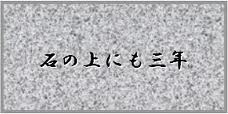
Kotowaza 諺

石の上にも3年 Ishi no ue ni mo san nenIshinouenimo3nen

This literally means ‘3 years even on a stone’, and means that even if you sit on a cold stone for three years, it will become warm. This may seem a little esoteric. What it alludes to is the value of persistence. It is very rare indeed that someone is great at something right from their first try. Only after years of hard training will important lessons come to fruition. So… don’t be so hard on yourself – it will come with time and effort!

Technical lesson 技の紹介

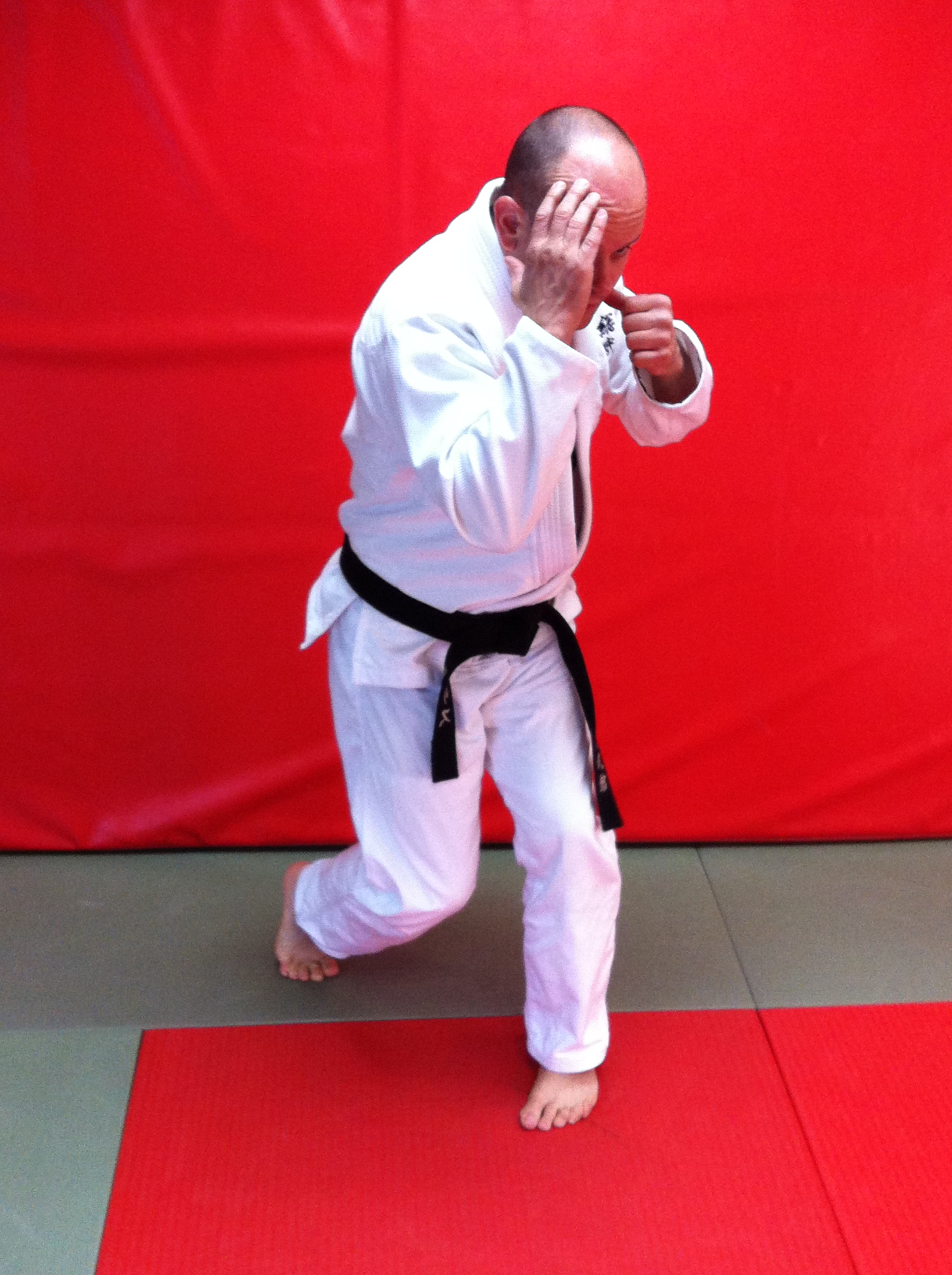
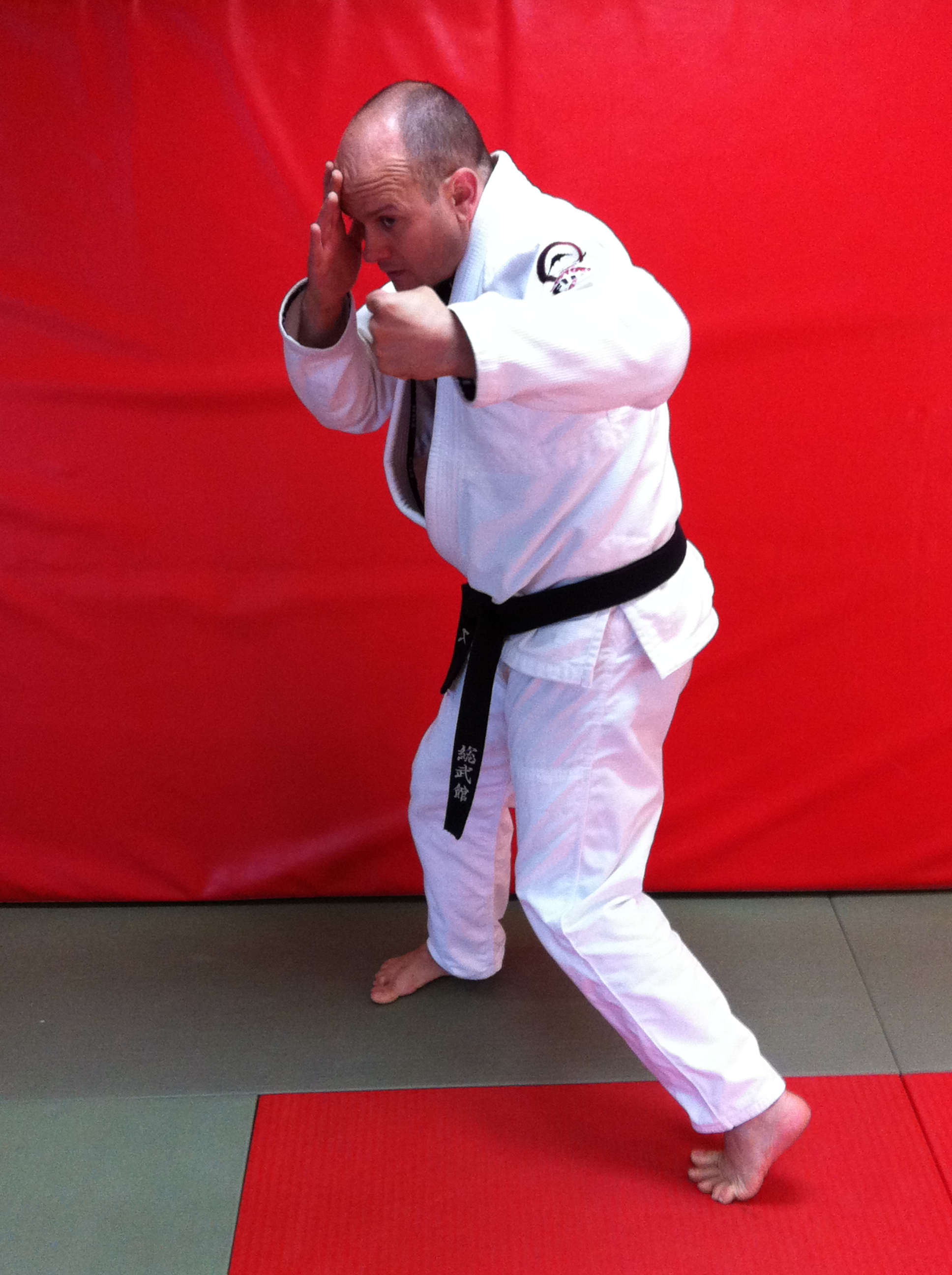
As with most techniques, there are a number of variations of the hook punch, but the end point is with the two fore-knuckles striking the jaw line, or less commonly the temple or floating ribs. The hook punch commonly is used in combination with cross punches and uppercuts or to set up right leg mawashi geri.

Hook start

Hook start

When setting up to hook punch, ensure that the toes of the front (left) leg are pointed slightly inward. Outward toes will add pressure to the front knee and detract from the explosiveness of the punch. Turn your hips to the left, drop your weight onto your front toes in a spring-loading action, and keep your right hand high. Keep your left hand up and elbow in tight – don’t swing the arm. Explode off the front toes, turning your entire body – except your head – 90o to the right. Don’t lose eye contact with the opponent, but move your head in the same direction as the trajectory of the punch. Raise your left elbow to perpendicular to the fist with the elbow bent slightly less than 90o. For a close target, keep your palm facing inward. For a longer range hook punch, you have the option of extending your arm with the palm facing down, but this variation

Hook finish

Hook finish

jeopardises your small finger knuckle, so be careful! Immediately after the punch, drop the left elbow down and consider following up with another attack, or quickly weave out of range. Do not remain in close distance directly in front of your attacker without continuing to attack.

Posted in Uncategorized | Leave a comment

November news

This has been another huge month! Congratulations to everyone who competed in the AMAA full contact martial arts competition on Sunday 20th October. Sobukan Martial Arts made a great impact with the most students and winning the most medals. Jo Purvis got called into fight with no preparation and still demolished her younger, heavier463 opponent! Despite injuring himself in a motorbike accident a week earlier, Raghu stepped onto the mats to face an opponent 20 kgs heavier than himself – and who was a black belt in judo with muay Thai and MMA experience – and drew! In fact, every competitor from Sobukan won a medal. I was extremely proud of the discipline, technique, spirit and conduct of our students.

Last month I wrote about my vision for Sobukan students and in particular for black belt candidates. I spoke about how each student will be proficient in all ranges of combat. While each student will possess core skills to escape, kick, punch, throw, clinch, choke, submit and arrest, I anticipate that each student will choose to specialise in their preferred area within the martial arts and natural leaders – or Subject Matter Experts (SMEs) in each system will emerge. Recently I have been trying to spend some time with some of these SMEs outside of the dojo to further develop our skills.191

Some students have already demonstrated specialist skill in selected areas, such as Geoff and Julie’s proficiency and passion for kata and Koryu Uchinadi Kenpo Jutsu (KU)/karate drills. Daniel and Kynan are working hard to be SMEs in judo and jujutsu. Umehara san adds his knowledge of Japanese culture and has made great progress in Hakkoryu Jujutsu. Nick and Aaron have demonstrated great skills on the ground and in shooto (MMA) sparring. And then there are those who have demonstrated the commitment and ability to be future leaders in all arts – Raghu, Pacey, Chris, Jason, the Cernev brothers and many many more. We are blessed with depth of knowledge and talent.

The children have shown great potential leadership. Max and Dylan are great all-rounders and senior students. James Palmer has demonstrated great maturity and skill. Jayrell has great grappling, Ky has powerful throws. Tyzak has lightning fast strikes (as does his brother!). Ethan demonstrated great fighting skill last week. Hugo has amazing strength. Again, I could go on and on. Even the white belts have demonstrated great talent. I have great expectations for this little club of ours! I am very excited about our future together.

Recently we have been focussing on preparing our fighting team for the AMAA competition, the results of which you can find below. For the next few weeks we will concentrate on grading syllabus and working on aspects that have taken a back seat to the 3Cs (counters, combinations and conditioning) of competition training.

Awards 表彰

Earlier in the month, we celebrated our 2nd anniversary, and several people were presented with awards. These are always very difficult for me, as there are so many deserving candidates. However only a few awards are given to preserve the feeling that each one is carefully selected and recipients should be very proud. The awards are decided on the basis of several criteria: attendance, effort, improvement, attitude and all-round ability. For the first time, this year a senior student of the award was also presented.

Senior student of the year: Geoff Tynan
Junior student of the year: James Palmer
Most improved junior students: Meg Nelson and Sei Gillies
Little Samurai: Tarcan Kupsch
Encouragement award: Max Wright098

The anniversary itself was great fun, we were blessed with perfect weather and had loads of food and drink and of course very good company. We sat and chat, and had some games for the kids: a piñata and suikawari (blindfolded watermelon smashing), both of which the children (of all ages) demolished with a wooden sword.

Hanshi seminar 16/17 November                                                                                                                      

The world’s most foremost Karate researcher and historian, and the head of IRKRS and Koryu Uchinadi Kenpo Jutsu, Hanshi Patrick McCarthy will be visiting SA on November 16 and 17! Shawn Donaldson (Denshinkan) and Sobukan will host Hanshi McCarthy for the weekend of training – for adult students only. Hanshi is widely recognised as the world’s leading expert in kata and related karate practices. He is responsible for developing approximately half of the drills in our syllabus! This is a rare chance to train with the best, please do whatever you can to ensure you will be there!! http://www.koryu-uchinadi.com/index1.html

When:    Sat 16 and Sun 17 November
Where:   Sobukan Martial Arts – Goshin Judo Kan, 917a South Road, Clarence Gardens
Who:      Adult students
Why:       To learn from the best!
Cost:       $70 for one day or $100 for both

Hanshi poster

Grading 2 December 昇級試験

November classes will focus on grading criteria, but please take control of your learning and ensure you enquire about any part of your syllabus that you are not confident with. Rather than aim for perfection before testing for your next belt, I would much prefer that you challenge yourself – never fear failure! With your new belt, you will still have plenty of opportunity to continue to develop the more basic drills (everyone does tegumi!), but passing the test unlocks the next level of learning. Learning is never linear. You start with a steep learning curve that will naturally plateau. Our syllabus (and regular gradings) ensures that your learning pattern will be a succession of small steep curves rather than one long line. I strongly believe that this assists development, motivation and momentum.

Competition results 空手大会の結果

Gold medal winners:
Raghu Anbalagan
Jo Purvis
Ethan Gifford (x2)
Aiko Nelson
Arian Amrein
Joel Austin
Tyzak Purvis
Ky Scarpellini
Nick Gillies
Sei Gillies
Chris Gillies

Silver medals:
James Fowler
Meg Nelson
Christopher Tsiavlis
Marko Tsiavlis
Jyah Purvis
Tyzak Purvis
Zane Scarpellini

Encouragement award:
Sei Gillies
Some medal winners had to leave early. Thank you to Jhett Morris for collecting the medals on behalf of the winners.

Kotowaza 諺 – 温故知新 On ko chi shin  

This is very timely as this kotowaza is one of the catch-phrases used in the International Ryukyu Karate Jutsu Research Society (IRKRS) headed by Hanshi Patrick McCarthy, whom we have the honour of hosting in a few weeks. Following is the IRKRS interpretation of this kotowaza:

Onkochishin (Study the old to understand the new): Examine things of the past, and obtain the new knowledge and the opinion from there. Taking a lesson from the past. Taking a lesson from the wisdom of the ancients. Follow the old ways.

Technical lesson 技の紹介

If your jab is the lightening, then your cross punch is the thunder!

The cross punch (or gyakutsuki) should be fast, direct and use the entire body to achieve momentum in one well-timed kinetic chain. Assuming a left food forward fighting stance, the right hand punches. The target is often the jaw, throat or body. Here is how to do it correctly:

  1. Without telegraphing, drop your weight onto your right big toe. Keep your hands up and your elbows close to your body.Iphone 027
  2. Explode forward with your entire body, starting with the right toes and knee. ‘Drop’ the left knee so that your weight falls forward and slide the left foot forward and to the left, landing the foot with toes facing slightly inward. This will help you follow up with a left hand punch, such as a hook or body rip. The foot should not land until the punch makes contact.
  3. The right hip will rotate forward using the left hip as a pivot point. These three points will rotate and spring-load the waist. Ensure that your right elbow is still close to your ribs and your hands are held high. Let the right shoulder explode forward and rise slightly to cover the right side of the jaw. These first three stages generate the power for the punch.Iphone 035
  4. While the above kinetic chain is in motion, focus on punching from the elbow and extend the right hand quickly and directly, making contact with the target with the bones of the arm, wrist and knuckles of the fore and middle finger in alignment. Your head should also travel slightly to the left to avoid counters and to add momentum to the punch. Ensure that your hands are still high to cover against unexpected punches and quickly retract the hands and body to a safe distance, or follow up with further attacks.
Posted in Uncategorized | Leave a comment

October news

This gallery contains 4 photos.

Greetings 挨拶 Welcome to new students Michael, Charlie, James and Georgios! As we head into the third year of Sobukan training, our methods continue to evolve, but the goal remains the same: to provide fun, safe training in order to … Continue reading

More Galleries | 1 Comment

September news

Welcome to new students Richard, Lucas, Marc, Kensei (Robert), Ben, Tarkan and Sarah! Thank you to all the children who attended the Child Safety lecture this month, which was run by three police officers and the judo club. It was a great way to help students relate their martial arts training to real life situations, such as bullying, kidnap and cyber-crimes.

2 year anniversary 

This month we will celebrate the second anniversary of Sobukan, and October marks one year since we moved to our current dojo in Clarence Gardens. To celebrate, let’s gather on Saturday 5th October around 1pm at Himeji Gardens (near the corner of Hutt St on South Tce in the city) for a relaxing picnic and a chat and a bit of light training in the Japanese gardens. This will give us plenty of time between Saturday Jujutsu to collect our families and get ready. There will be awards for junior students who have put in extraordinary effort.

Sobukan rash tops

Iphone 003Coinciding with our anniversary, we have just received a delivery of Sobukan rash tops! Sizes are limited (big sizes are plentiful!), but available at the heavily subsidised price of $30. These are a trial, and if they go well we will look into ordering short sleeved rash tops, t-shirts and hoodies. Please order soon to avoid missing out on your size.

Kudo equipment

This month I will be joining as a member of Kudo and ordering two sets of Kudo headgear. This will allow interested parties to prepare for Kudo competition next year. Kudo was established in 1981 by Takashi Azuma, who was an All-Japan Kyokushinkai Full Contact Karate champion and Judo 3rd dan black belt. He established Kudo as he felt that the rules of Kyokushinkai, which does not allow throws and grappling, head punches, elbows and headbutts, was too limiting. Kudo headgear allows for a realistic and safe form of MMA sparring that is more closely aligned with self-defence than UFC-style MMA. I believe that this form of kumite will perfectly complement our Koryu Uchinadi Kenpo Jutsu kata and drills and help combine our striking, throws and grappling.
Web:        http://www.ku-do.com/eng/index.html
Youtube: http://www.youtube.com/watch?v=iqxwBNrum5c

Hanshi seminar 16/17 November                 

Gladstone Gaol seminar 078The world’s most foremost Karate researcher and historian, and the head of IRKRS and Koryu Uchinadi Kenpo Jutsu, Hanshi Patrick McCarthy will be visiting SA! Shawn Donaldson (Denshinkan) and Sobukan will host Hanshi McCarthy for the weekend of training. Hanshi is widely recognised as the world’s leading expert in kata and related practices. This is a rare chance to train with the best, and I hope that everyone will take advantage of this opportunity to take your martial arts to the next level. More information to follow soon. http://www.koryu-uchinadi.com/index1.html

Grading 

We will have the next grading sometime in the not-too-distant future, probably in October or November. Please take control of your learning and ensure you enquire about any part of your syllabus that you are not confident with.

Demonstration – OzAsia Moon Lantern Festival 19 September 

We have been invited to demonstrate Japanese martial arts at the OzAsia Moon Lantern Festival. This time I would love to do something special. This is a wonderful opportunity to develop and demonstrate your abilities to large groups of people and help promote both Japanese martial arts and your dojo. Demonstrations are fun events and a great chance to socialise with your dojo mates outside of regular training. Please RSVP ASAP to let me know if you will be able to assist in the demonstration. The OzAsia Moon Lantern Festival will be held on Thursday, 19th September 2013 at 3:40pm (yes, that’s right) in Elder Park. http://www.ozasiafestival.com.au/

Upcoming competitions 

AMAA (Karate)
The next AMAA competition is scheduled for 20 October, and includes events such as kata, complete sparring (striking to body, throws and grappling), triple event (one round each of striking to body, throws and grappling), and contact and non-contact sparring. This is now just around the corner! Please let me know if you are interested in competing in the future. http://australianmartialartsassociation.com/

Kotowaza 諺

七転八起 Nana korobi ya oki.
One of my favourite Japanese expressions (kotowaza) is ‘nana korobi ya oki’. Literally this means ‘seven falls, eight rises’, and encourages the subject to try again after each failure. No matter how many times you fail, you only need to succeed one. Keep going!

Technical lesson 

Iphone 010 Iphone 011So where to start for the first technical lesson in the monthly newsletters? At the beginning, of course!

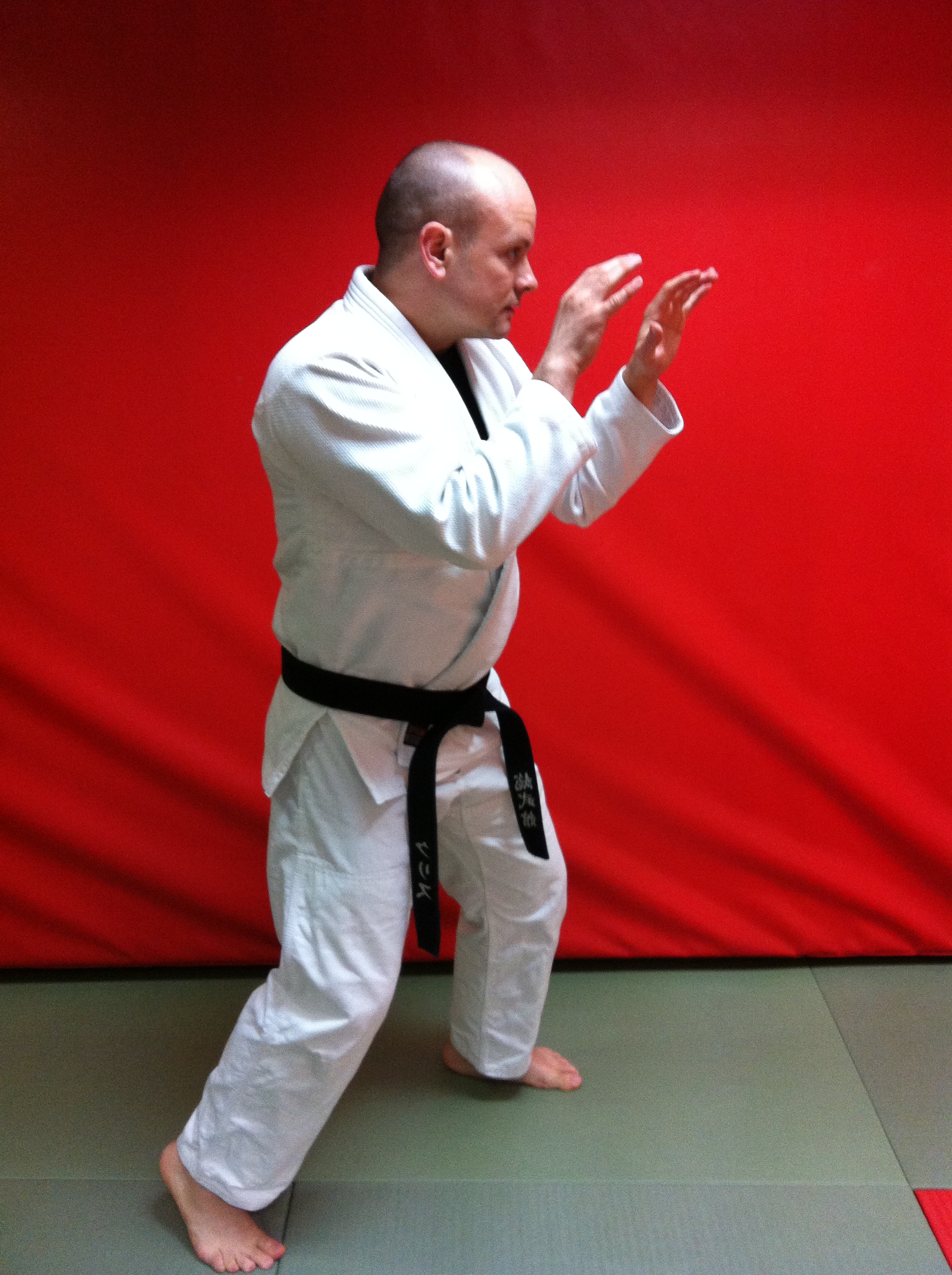
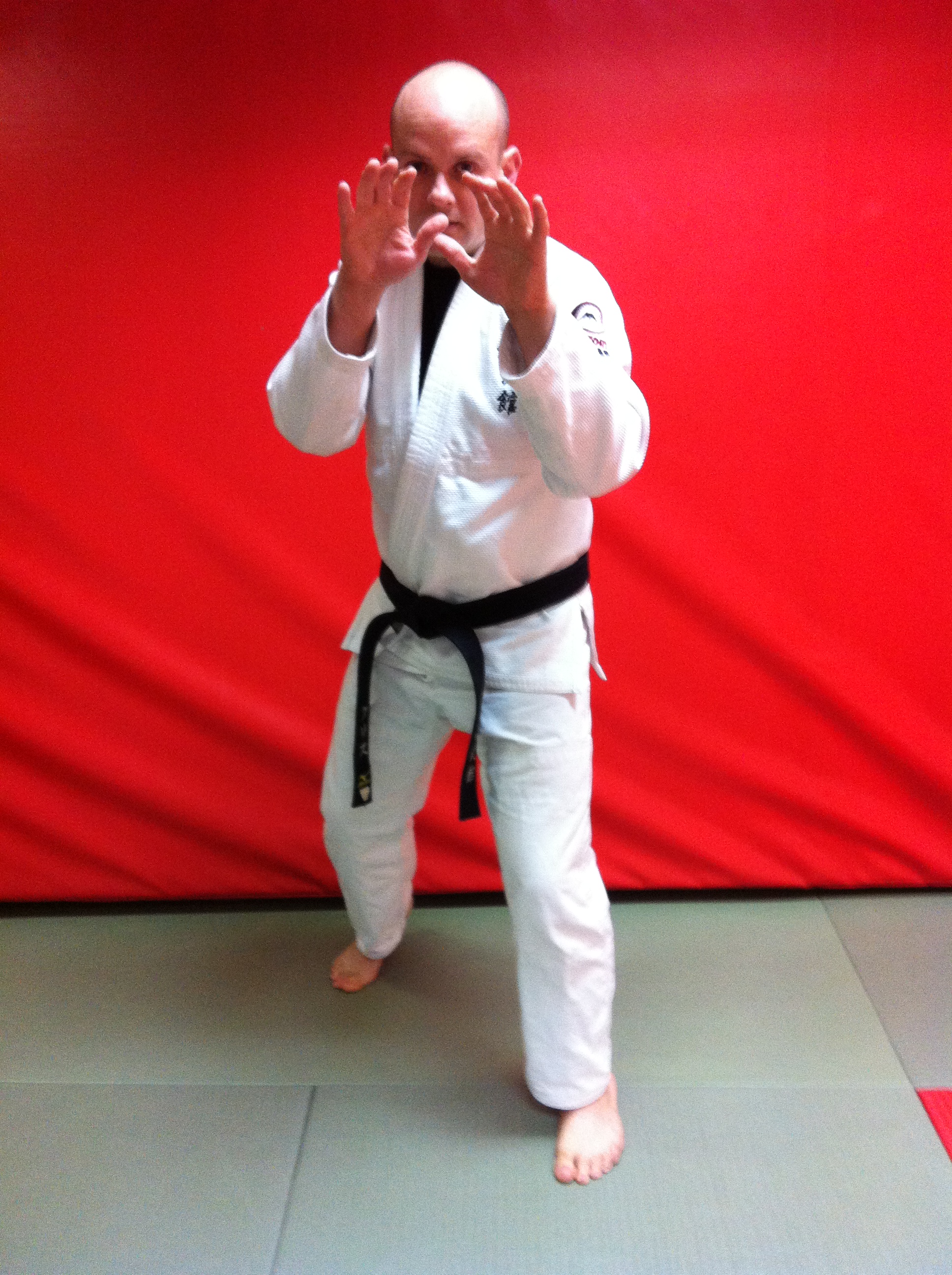
構え (kamae) refers to a ready position, a fighting stance, often known as a ‘fence’ or ‘guard’. There are many versions of kamae, with each variation designed to exploit your strengths, while mitigating those of the opponent or opponents. The kamae can be conveniently broken down into four parts: the legs, body, arms and head.

Legs: Stand up. Talk a walk around the room. Each of your steps should be roughly the same length and your feet will remain in line with your hips. This is the most natural stance for you to fight from. Each step should be roughly one hips width wide and about the same length, maybe slightly longer. Bend your knees a little and place your weight on your toes, letting your heels float off the ground. Your rear foot should feel springy, preparing to pounce or absorb impact at any moment.

Body: If fighting a single opponent in a combat sport, it is recommended to lean significantly forward. However, in a street confrontation, it is necessary to be prepared for surprise attacks from any angle. Stand straight and angle your body slightly, keeping your abdominal muscles taut and feeling power in your lower back. The core is the source of your power, and is the only part of your body that should feel slightly tense. Your weight should be very marginally forward, as it is easier to move both forward and backward quickly from this position. The Japanese say ‘気持ちだけ前へ’, which means to just feel or imagine that your weight is forward without deliberately shifting your weight.

Arms: Raise your hands until your thumbs can touch a couple of inches in front of your chin to protect your face. Your hand position will change depending on the height difference between your attacker and yourself, and your preferred attacking weapons. Open your hands with your palms outwards. This looks passive, rather than aggressive and is equally applicable during the negotiation and physical defence phases of the self-defence stages. Open hands are more dexterous to catch incoming attacks and more flexible in terms of attacking options.

Your elbows must be in front of your floating ribs, not out to the side. This is essential for a number of reasons:

  1. Protection for the body
  2. Maximise kinetic energy transfer from the hips
  3. Absorb incoming wrestling attacks
  4. Better alignment of the fist when punching (wide elbows = pinkie injuries!)
  5. Minimised telegraphing of hand attacks.

Head: Lower your chin slightly to protect your jaw and throat. Look at your opponent’s throat, but keep your vision soft. Peripheral vision facilitates faster reactions, which is part of the survival mechanism of the animal world. Direct vision is perfect for predators, when completely focussed on attack without concern for protecting one’s self. Keep your eyes unfocussed, but be ready to hone in on the target when the opportunity arises.

Posted in Uncategorized | Leave a comment